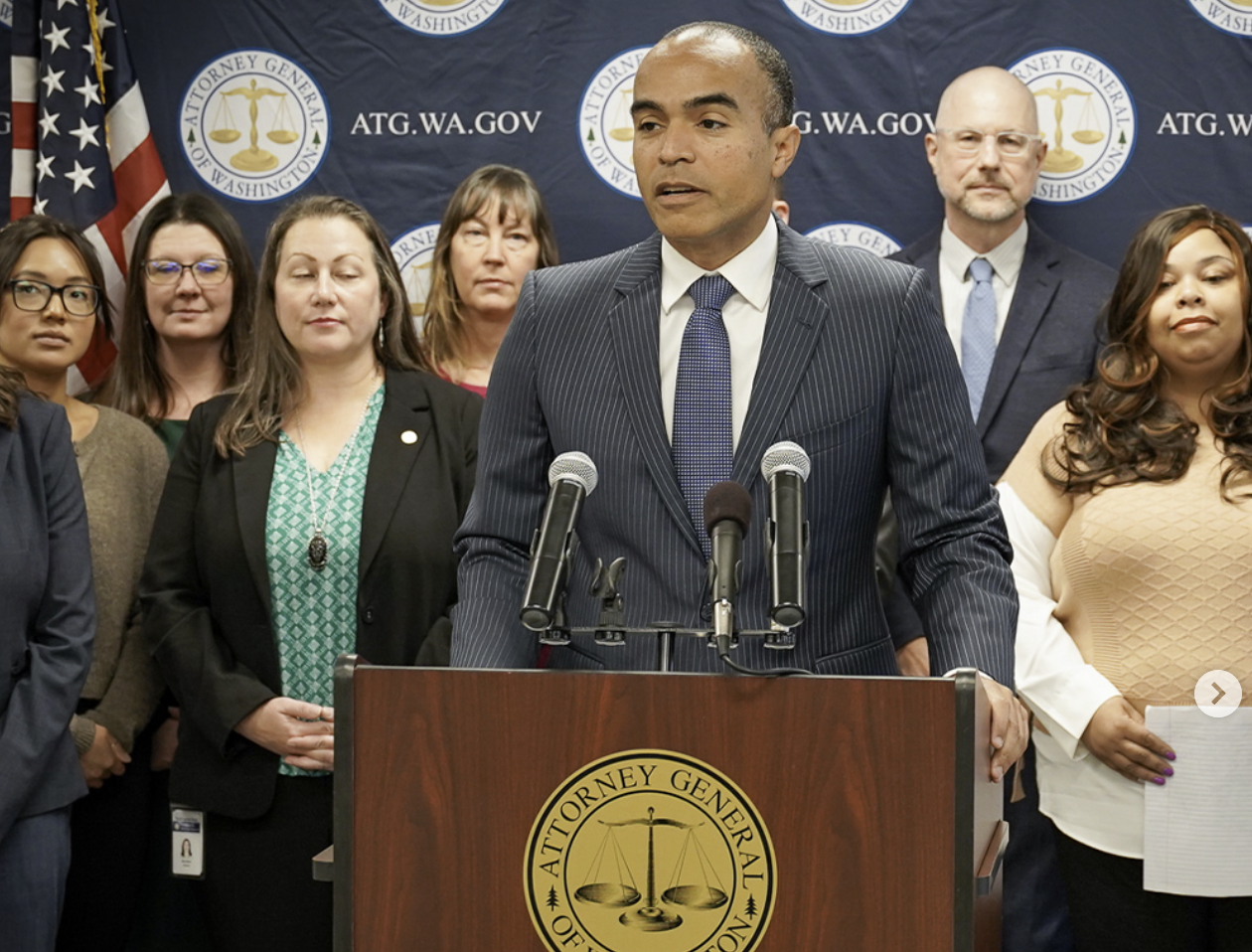
Washington Attorney General Nick Brown. (Photo: WA AG Office)
OLYMPIA, Wash. — Washington Attorney General Nick Brown is warning residents to watch for charity scams as donations begin flowing to victims and families affected by the Nippon Dynawave paper mill disaster in Longview.
The Attorney General’s Office issued the warning Monday, urging Washingtonians to research organizations before donating money.
If you are looking to donate to Longview families, please give thoughtfully and look out for potential scams or fraudulent solicitations.
— Attorney General Nick Brown
“Our thoughts are with the survivors and families of those killed or missing in the Longview disaster, and such a disaster makes us want to help however we can,” Brown said. “If you see a charity solicitation that looks suspicious, please file a complaint with our office.”
Research Charities Before Donating
The Attorney General’s Office says donors should take time to verify charities before making a contribution. First, donors should check whether a charity holds registration with the Washington Secretary of State. Registered charities make financial records and tax status available for review.
In addition, donors can check charity ratings and financial transparency through independent watchdog tools including Charity Navigator, Guidestar’s Nonprofit Directory, and the IRS Tax Exempt Organization Search.
Beyond registration, the office says residents should consider whether a charity has a proven history of providing the type of disaster relief needed before sending money.
Watch for Common Scam Tactics
Scammers often use pressure tactics to rush donations. They may demand immediate payment or ask for personal information. If a solicitation feels urgent or pushy, that is a likely sign of fraud.
The Attorney General’s Office also warned residents about organizations that use names similar to well-known charities. Fraudsters may create websites that closely resemble legitimate fundraising pages, sometimes with only a slightly different web address. Donors should verify any URL begins with https and matches the known address of a trusted organization.
Furthermore, officials urged residents to use caution when scanning QR codes connected to fundraising campaigns. Scammers can use QR codes to send donors to fake websites or malicious links. The office recommends scanning QR codes only from trusted sources and always verifying the URL before clicking.
Additionally, the office encouraged residents to report unwanted robocalls and robotexts seeking donations. Generally, unsolicited robocalls and robotexts are illegal. Recipients can report them using the AG’s Telephone Scam Reporting Form.
Crowdfunding Campaigns Carry Additional Risks
The Attorney General’s Office says crowdfunding campaigns operate differently than registered charities. In most cases, donations go directly to the campaign organizer first. That person then controls how and when the money reaches anyone else.
Unlike registered charities, individual fundraisers generally do not file registration with the state or report how they spend donations. Contributions to individuals are also not tax-deductible.
Because of those differences, officials encourage donors to research an organizer before contributing to any crowdfunding campaign. When possible, they recommend giving directly to established organizations serving victims and their families. If a crowdfunding page claims to benefit a named charity, donors should give to that charity directly to ensure the money reaches its intended destination.
How to Report a Suspected Charity Scam
Brown is encouraging residents to report suspicious fundraising efforts. Anyone who believes they have encountered a charity scam or fraudulent solicitation can file a complaint with the Washington Attorney General’s Office online.
The warning comes as communities across Washington continue raising money and organizing support for those affected by the deadly Nippon Dynawave paper mill disaster.
Frequently Asked Questions
About the Author