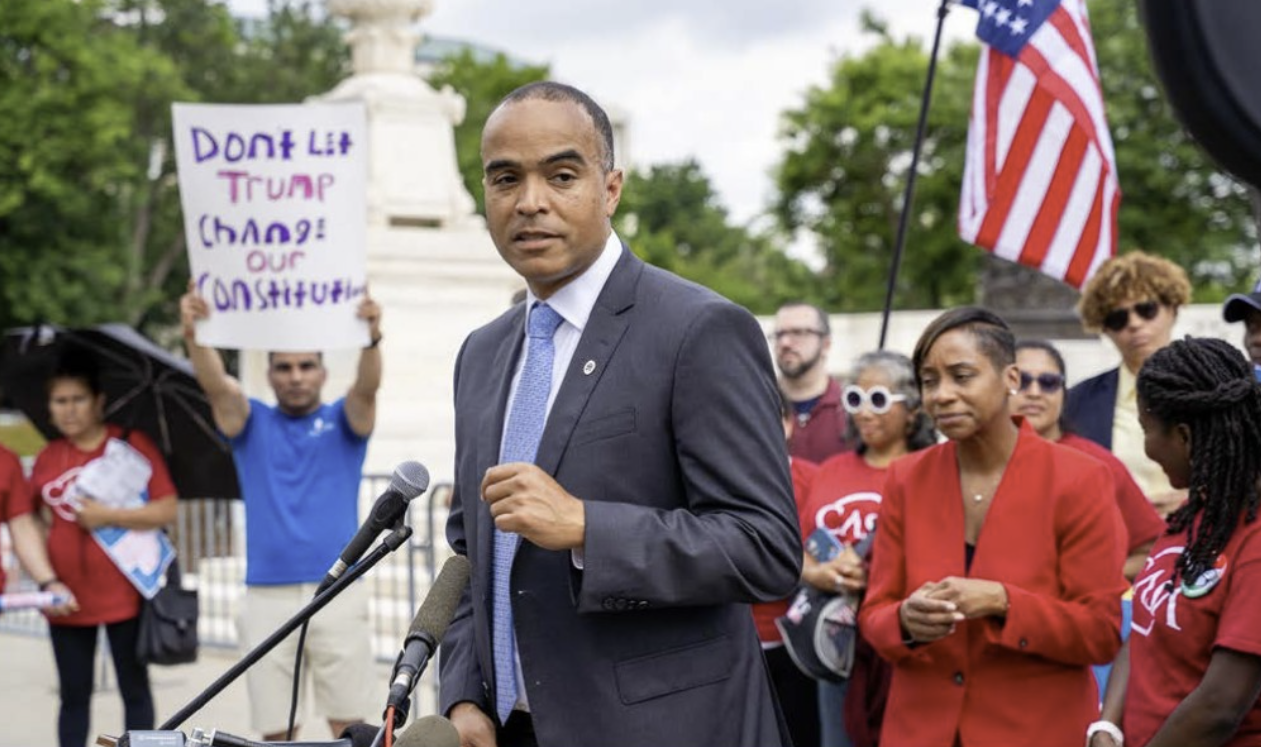
Washington Attorney General Nick Brown (Source: WA Attorney Gen. Nick Brown IG)
OLYMPIA, Wash. — A federal judge has temporarily blocked a new U.S. Postal Service rule that states say could affect how they administer vote-by-mail programs ahead of the November midterm elections.
The order came in a lawsuit filed by a coalition of 25 states, co-led by Washington Attorney General Nick Brown, challenging the USPS rule.
“The Postal Service’s attack on voting rights is blocked for now thanks to states like Washington stepping up in court. The fight will continue against the president’s unconstitutional overreach on elections, and the states will win.”
— Nick Brown, Washington Attorney General
The temporary restraining order was filed in the U.S. District Court for Massachusetts. It blocks USPS from requiring states to obtain the federal government’s approval of ballot and return-envelope designs. In addition, it blocks a new USPS portal for tracking voter information, and comply with other provisions.
According to the court, compliance with the rule before the November elections would be “practically impossible.”
The judge noted states would not have the time to redesign and produce new ballots. The court also said more time was required to train state and local election officials and upload a massive set of voter information to a new federal portal.
According to the court, these requirements created a significant risk of disenfranchisement. Particularly, it said because USPS’s rule neither provided a deadline to the states for ballot and envelope designs nor guaranteed a turnaround time for USPS’s approval of those designs. The court concluded that states face irreparable harm because many had already ordered their ballots, with some states required by state law to begin sending them to voters as early as next week.
How the rule came about
On March 31, President Trump issued an executive order attempting to establish a national list of eligible voters and directing the U.S. Postal Service to transmit mail ballots only to voters on the list. On Aug. 26, USPS officially published a new rule implementing the president’s demands that require states to register with USPS every voter who is eligible to vote by mail with USPS and tasking USPS with compiling the registered voters into state-specific lists.
That same day, Brown co-led a coalition of 25 states in filing a lawsuit to block the unlawful rule. The coalition now seeks a preliminary injunction to stop the rule from taking effect while the lawsuit proceeds and until a final court decision is made.
The coalition argues that USPS’s rule upends successful, longstanding vote-by-mail procedures and violates federal statutes and the Constitution, which makes clear that states have the primary authority to administer elections.
In the 2024 general election, nearly 4 million voters in Washington cast their ballot that they received by mail.
Republicans challenge Washington’s position
Washington House Republican Leader Jim Walsh offered a different view of the USPS policy before the federal court blocked key provisions.
“The new US Postal Service policy on handling ballots in mail-in voting states is in effect. If a state does not comply with federal Voter ID requirements, the USPS will not handle ballots in that state. The current WA governor, State AG & Sec of State (chief election official) refuse to comply with federal law. So, as things stand, this new USPS policy will apply to WA’s November general election.”
— Jim Walsh, Washington House Republican Leader, via X, August 27
It’s important to note, the USPS rule does not describe its requirements as a federal voter ID mandate. Instead, it establishes standards for federal ballot-mail envelopes and requires election officials to submit voter information through a new Federal Ballot Mail Portal.
The rule also states that eligibility for mail and absentee voting remains governed by state law.
The distinction matters because Washington does not require voters to present identification to receive or return a mail ballot. The state verifies voter identity through other election-security measures.
Brown led this lawsuit with the attorneys general of California, Massachusetts, and Nevada. It was also joined by the attorneys general of Arizona, Colorado, Connecticut, Delaware, District of Columbia, Hawaiʻi, Illinois, Maine, Maryland, Michigan, Minnesota, New Jersey, New Mexico, New York, North Carolina, Oregon, Rhode Island, Vermont, Virginia, Wisconsin, and the Governor of the Commonwealth of Pennsylvania.
Frequently Asked Questions
About the Author