

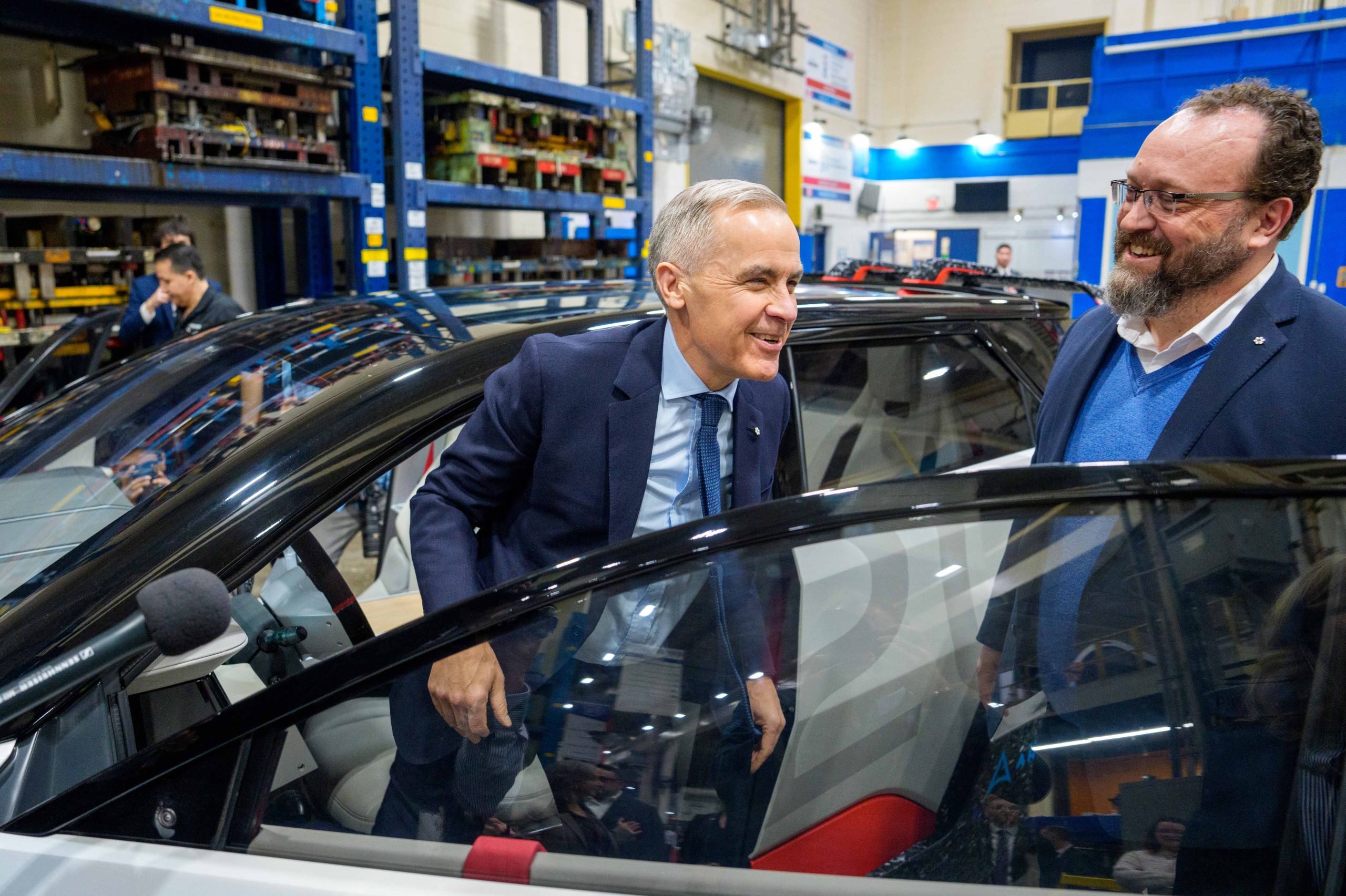
Prime Minister Mark Carney during a tour of the Martinrea International in Woodbridge, Ont., on February 5, 2026. (Photo: Lars Hagberg)
OLYMPIA, Wash. — Washington drivers continue to pay some of the highest gas prices in the nation. Meanwhile, Canada is cutting fuel taxes. That contrast highlights diverging energy policies across North America.
Canadian Prime Minister Mark Carney announced a fuel tax cut that takes effect next week. He said drivers will save up to 10 cents per liter at the pump.
“We’re cutting taxes on fuel across Canada,” Carney said in a post. “Starting next Monday, you’ll save up to 10¢/L on gas at the pump.”
As a result, Canadian drivers will see lower prices. In contrast, Washington drivers continue to face some of the highest fuel costs in the country.
Washington prices remain above national average
Washington still ranks near the top nationally for gasoline prices. In many cases, statewide averages exceed $5 per gallon for regular unleaded, according to AAA data.
However, prices vary by region. For example, drivers in Bellingham typically pay slightly less than the state average. Even so, prices remain well above the national benchmark.
This climate change surcharge is little more than a vanity project designed to make people in downtown Seattle feel good about themselves, while severely penalizing working people across the rest of the state.
— U.S. Rep. Michael Baumgartner, R-Spokane
Where the cost comes from in Washington
This estimate varies based on carbon market prices and regional conditions.
Importantly, the Climate Commitment Act operates as a cap-and-invest system. However, fuel suppliers typically pass those costs to consumers.
Federal and state responses highlight partisan divide on fuel costs
Washington Republican leaders offered differing responses to recent fuel price concerns, with no unified statewide message following comments from Democrats calling for relief measures.
U.S. Rep. Suzan DelBene called attention to rising fuel prices and linked them to global conflict and recent market conditions.
“The average price of gas is $5.40 a gallon in Washington,” DelBene said. “That’s a dollar more than it was before this reckless war started with Iran. In western Washington it’s even more. Hurting families, making it harder when people are already struggling with high prices. All because of this reckless war.”
Former Washington Gov. Jay Inslee also tied energy costs to federal policy and international tensions, adding a satirical critique of political messaging around fuel prices.
“Now Trump blockades the Straits? This calls for a reboot. Make Gas Prices Greater Again,” Inslee said.
On the Republican side, U.S. Rep. Michael Baumgartner issued a measured call for state-level relief, urging Gov. Bob Ferguson to temporarily pause carbon auction costs under the Climate Commitment Act.
“Washingtonians are not just paying the price for Iran’s rogue behavior; they are paying a heavy premium driven by state policy,” Congressman Baumgartner said. “This climate change surcharge is little more than a vanity project designed to make people in downtown Seattle feel good about themselves, while severely penalizing working people across the rest of the state.”
However, state-level Republican leadership has not presented a unified response to recent fuel price increases, and reactions have largely come from individual lawmakers rather than coordinated party messaging.
Washington State Republican Party Chair Jim Walsh issued a social media post criticizing Democrats and calling for repeal of the Climate Commitment Act, but did not outline a temporary policy alternative such as a moratorium or short-term relief proposal.
Regional price comparison
Washington drivers pay more than the national average. For context, here are current averages:
- Washington statewide: $5.39 regular, $6.95 diesel
- Bellingham: $5.33 regular, $6.72 diesel
- Bremerton: $5.48 regular, $7.08 diesel
- National average: $4.13 regular, $4.85 diesel
(Source: AAA fuel price data, April 14, 2026)
Future increases remain scheduled
Additionally, Washington law schedules further fuel tax increases. Beginning July 1, 2026, the state gas tax will rise by 2% annually. The increase will adjust for inflation.
As a result, Washington is likely to remain near the top of national fuel price rankings unless broader policy changes occur.
“Subsidizing charging stations for Tesla’s needs to take a back seat to lowering the cost of living for everyday Washingtonians,” Baumgartner said. “Olympia must stop draining hundreds of millions of dollars from the pockets of working citizens every month during an international economic emergency.”
About the Author



1 thought on “Washington Fuel Prices Skyrocket as Canada Suspends Gas Taxes”