The U.S. State Department expanded social media screening to 14 additional visa categories. The policy is not limited to embassy applicants.
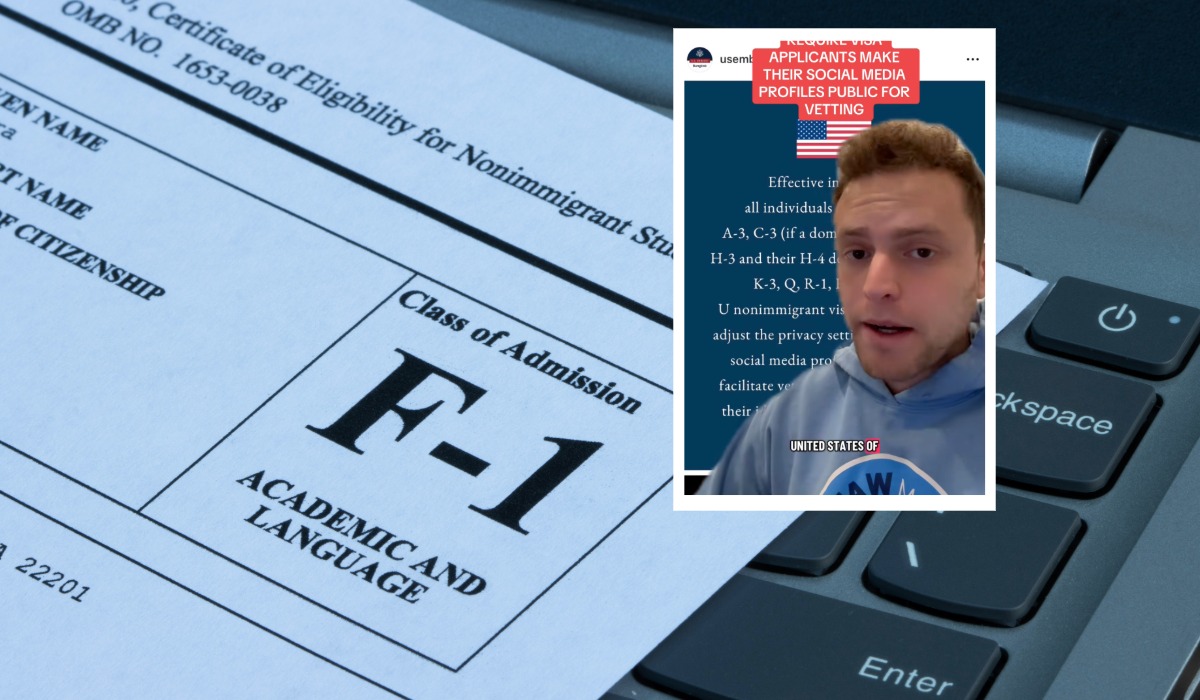
BLAINE, Wash. — A viral social media post from Aaron Parnas is drawing attention to U.S. visa screening rules, but federal guidance shows the claim understates how the policy works.
The post suggests the U.S. recently began requiring applicants at embassies to make their social media profiles public. However, the policy is broader and has been in place since late March.
The U.S. Department of State announced expanded screening measures on March 25, 2026, with implementation beginning March 30.
Visa Screening Policy Misstated Online
Posts on social media have understated visa screening requirements, suggesting that only applicants at U.S. embassies now must make their social media profiles public as a newly introduced policy.
That framing is inaccurate in that it only applies to embassy applicants, but guidance from the U.S. Department of State back in March is clear it is standard policy.
“The Department uses all available information in visa screening and vetting to identify visa applicants who are inadmissible to the United States, including those who pose a threat to U.S. national security or public safety,” a department release said. We conduct thorough vetting of all visa applicants.”
State Department: “…a National Security Decision.”
The updated policy applies to multiple nonimmigrant visa categories.
“Every visa adjudication is a national security decision,” the State Department release said. “The United States must be vigilant during the visa issuance process to ensure that those applying for admission into the United States do not intend to harm Americans and our national interests, and that all applicants credibly establish their eligibility for the visa sought, including that they intend to engage in activities consistent with the terms for their admission.”
Applicants in the expanded categories must set their social media accounts to “public” or “open.”
Officials say this step allows officers to review available information during screening. The requirement expands an existing policy.
Not a Location-Specific Rule
- H-1B and H-4 dependents
- F (academic student)
- M (vocational student)
- J (exchange visitor)
- A-3 (personal employees of diplomatic staff)
- C-3 (domestic workers in transit)
- G-5 (personal employees of international organizations)
- H-3 (trainees)
- H-4 dependents of H-3
- K-1 (fiancé(e))
- K-2 (children of K-1)
- K-3 (spouse of U.S. citizen)
- Q (international cultural exchange)
- R-1 (religious workers)
- R-2 (dependents of R-1)
- S (informants)
- T (trafficking victims)
- U (crime victims)
Source: U.S. Department of State press release, March 25, 2026. Full text available at state.gov.
ESTA Applicants Also Face Expanded Disclosure Requirements
The screening expansion is not limited to visa applicants. Travelers from Visa Waiver Program countries will also face broader disclosure requirements under a separate policy announced in December.
Since January 2026, the U.S. government has required many ESTA applicants to provide additional background information as part of the entry process.
The Visa Waiver Program allows travelers from 42 countries, including the United Kingdom, France, Australia and Japan, to enter the United States without a visa for short stays.
Broader Data Collection for Visa-Free Travelers
Under the updated requirements, applicants must submit five years of social media history. They must also provide phone numbers used over the past five years and email addresses used over the past 10 years.
Officials will make social media disclosure mandatory for ESTA applications. The form previously listed this information as optional.
Federal guidance also directs some applicants to ensure social media accounts are accessible for review.
Continuation of Existing Screening Policy
Officials describe the change as part of a broader effort to expand screening across all categories of foreign travelers.
The policy builds on existing vetting requirements for visa applicants. It extends similar scrutiny to travelers who previously entered under the visa waiver system with fewer disclosure requirements.
Authorities say the expanded data collection supports national security screening and helps identify potential risks before travel.
About the Author