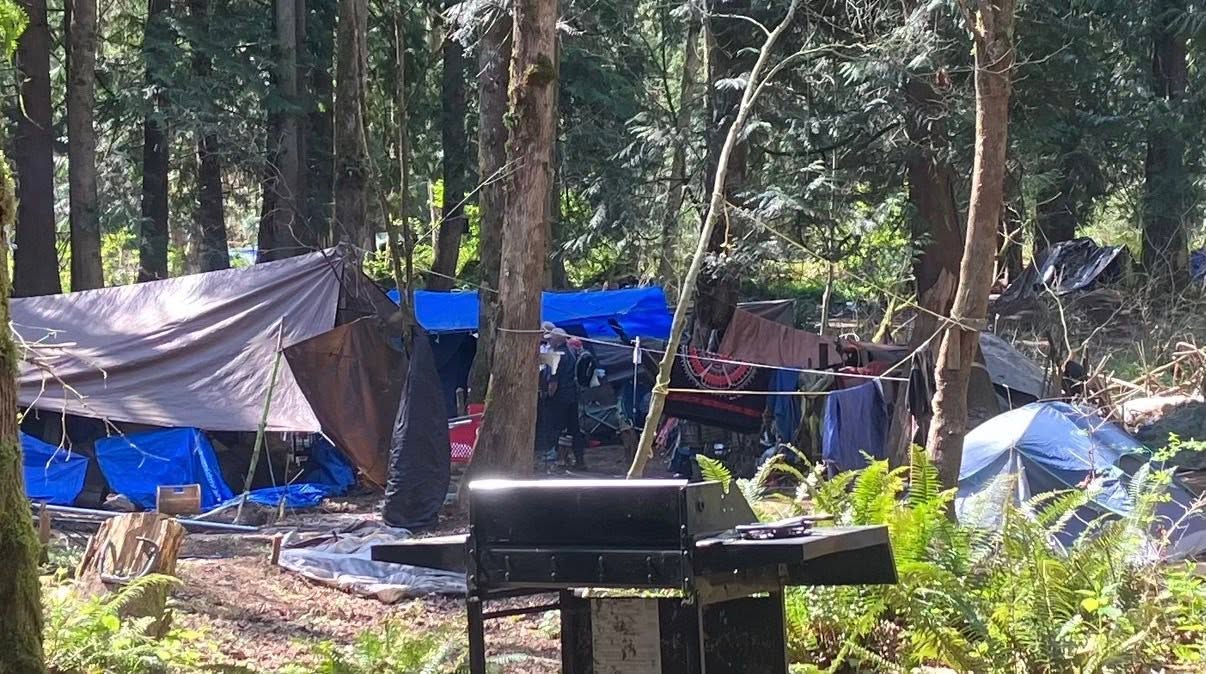
Whatcom County counted 840 people experiencing homelessness in 2026 as agencies prepare to clear a large encampment near Walmart in north Bellingham. (Photo courtesy of Julie Jansen Dorn)
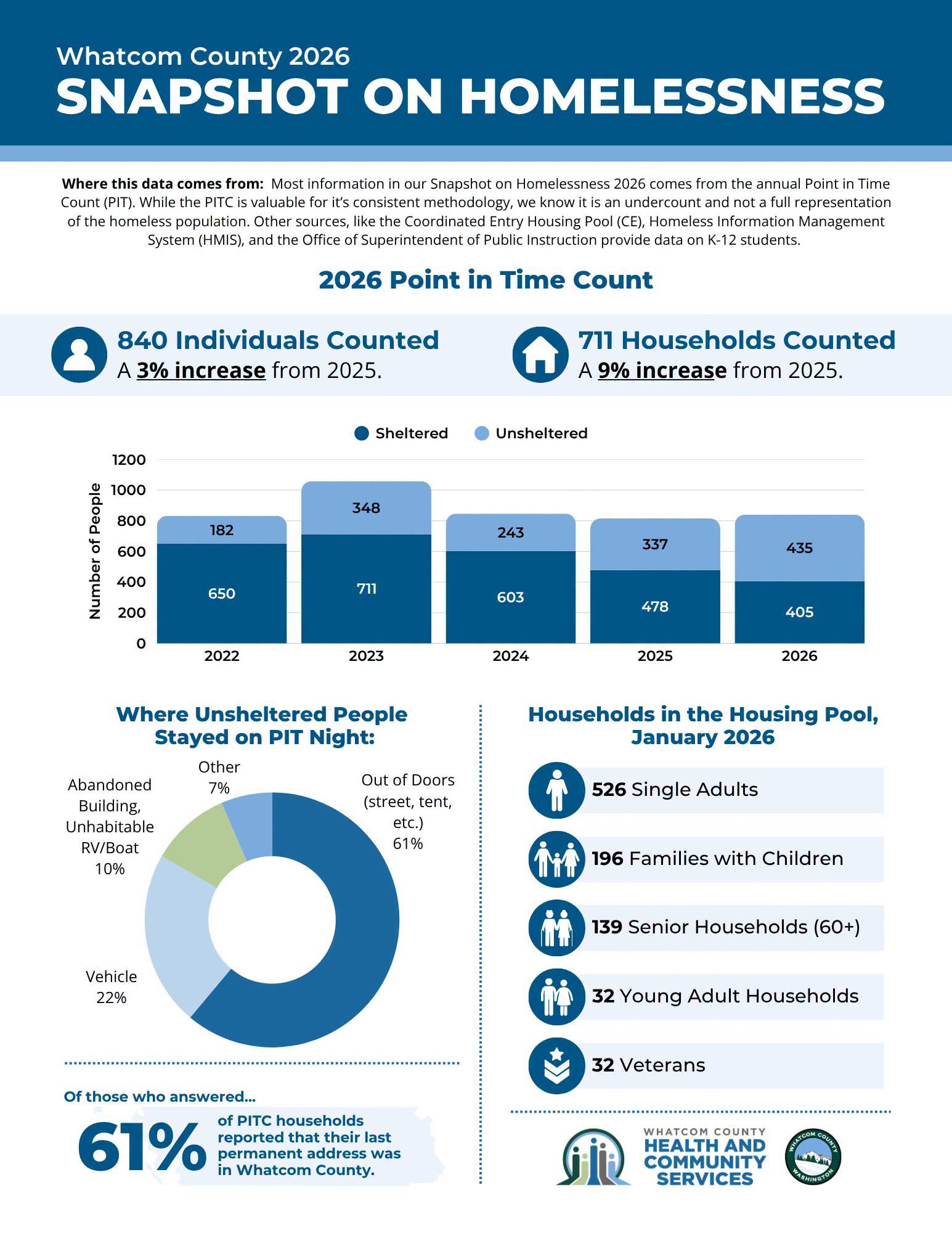
BELLINGHAM, Wash. — Whatcom County counted 840 people experiencing homelessness in 2026 as local agencies prepare for the August removal of a large encampment near Walmart in north Bellingham.
The annual Point in Time Count found 435 people living without shelter, up 30% from 337 last year. Meanwhile, the number staying in shelters or transitional housing fell 15% to 405.
“The absolute number has been more-or-less steady for the last three years. Even as hundreds of people are housed each year, hundreds more fall into homelessness or remain stuck on waiting lists.”
Whatcom County Health and Community Services
The county said it lacks the resources to provide housing for everyone who needs it. Additionally, the department expects less funding next year for organizations that operate shelters.
“At the same time, there is reason for hope,” the department said. “New affordable housing is opening, and rent prices appear to be stabilizing.”
Lighthouse Mission Ministries, the City of Bellingham and the Opportunity Council’s Homeless Outreach Team have started preparing to assist people living at the encampment. Other outreach providers have also joined the effort.
“This encampment is very large, highly established and presents significant safety concerns,” Lighthouse Mission Chief Program Officer Brittany Hargrove said. “At the same time, many individuals have lived there for an extended period and view it as their community. Because of that, this sweep will likely feel more disruptive and consequential to residents than other encampment removals they may have experienced in the past.”
Mission Prepares Up to 30 Additional Beds
Outreach teams have visited the encampment several times in recent weeks. During those visits, they distributed water, hygiene products and other essential supplies.
Teams are also preparing to support residents when authorities direct them to leave in August.
Lighthouse Mission will temporarily adjust its intake capacity and add up to 30 beds if needed, Chief Operating Officer Justin Reeves said. Staff members are preparing to help new residents through the intake process.
However, Reeves said the Mission’s experience following previous encampment removals shows that few residents accept offers of shelter and meals.
Hargrove said encampments can develop their own culture, relationships and informal support systems. Residents may share supplies, exchange information and protect one another. Those relationships can exist even when an encampment also experiences conflict, exploitation or crime.
“When someone feels a sense of belonging and is able to meet at least some of their needs through that community, informal networks, or other resourceful means, entering a shelter or engaging with formal services may feel less necessary or appealing,” Hargrove said.
Moving into a shelter may also require someone to leave behind relationships, routines, possessions or pets. In addition, some residents may fear losing their autonomy.
“For that reason, outreach efforts are often most effective when they focus on building trust, understanding what the encampment community provides and addressing the specific barriers that make shelter or services feel like a less desirable option,” Hargrove said.
County Count Shows More People Living Outside
Whatcom County Health and Community Services reported a 3% overall increase in homelessness from 2025. The total has remained relatively steady for three years after reaching 1,059 people in 2023.
However, the county cautioned that a change in state definitions accounts for part of this year’s increase in unsheltered homelessness.
A local tiny home village no longer meets the state Department of Commerce’s technical definition of a shelter. The village moved to a site where more residents share shower facilities. As a result, the count classified 30 residents as unsheltered.
Without that change, the county would have counted those residents as sheltered.
The Point in Time Count also provides an incomplete picture. Outreach workers conduct the count during a single night in January, and they cannot locate every person without stable housing.
Still, the figures show a continuing shift away from shelters. Whatcom County counted 182 unsheltered people in 2022. That number has since increased to 435, while the sheltered population dropped from 650 to 405.
Student Homelessness Reaches Record High
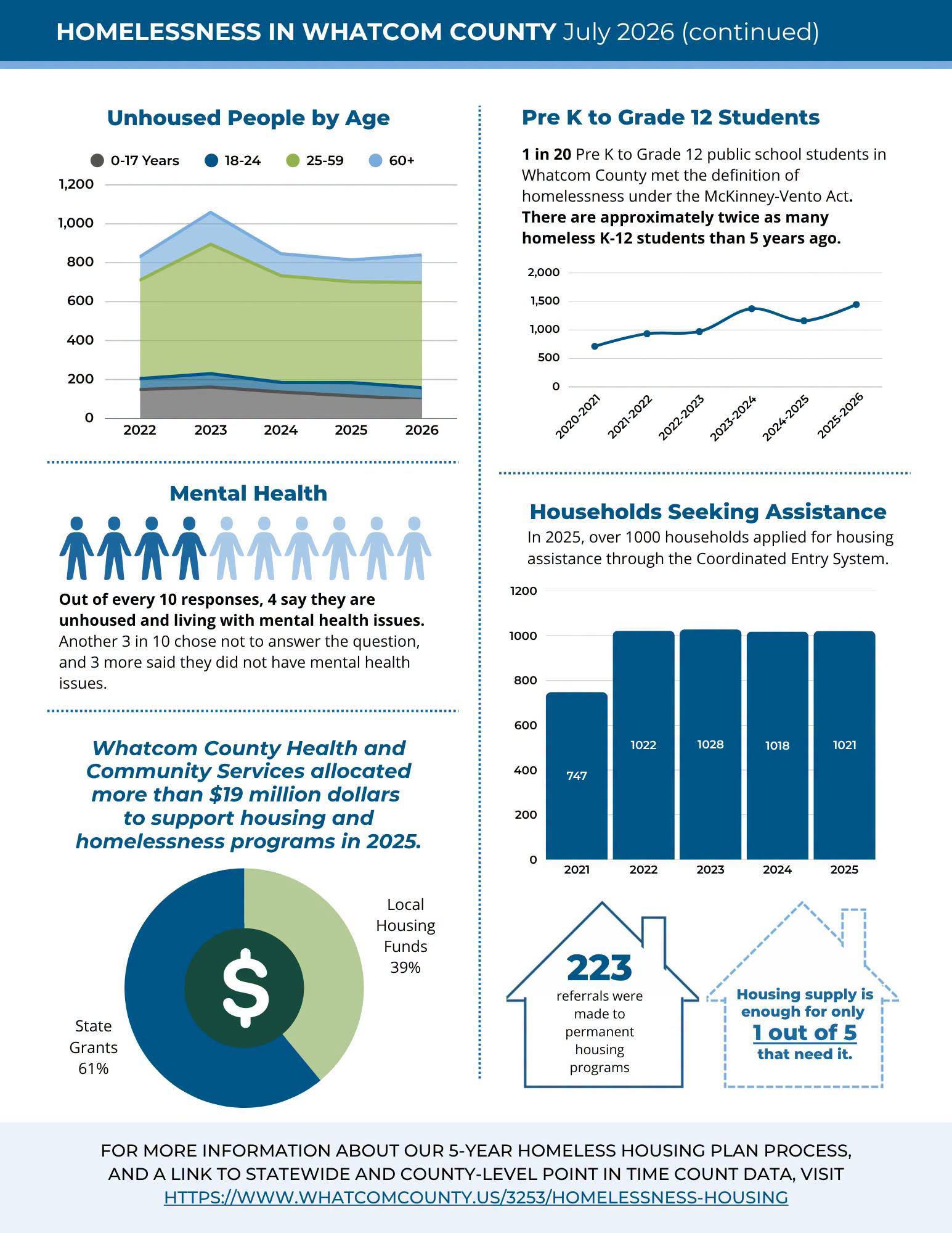
A separate count found that 1,447 Whatcom County students experienced homelessness during the 2025-26 school year. That represents about one in every 20 public school students from preschool through 12th grade.
The figure has roughly doubled since the 2020-21 school year, when schools reported 713 students experiencing homelessness.
The federal McKinney-Vento Act uses a broader definition than the Point in Time Count. It includes children living in shelters, vehicles or tents. It also covers students staying temporarily with friends or relatives or living in hotels and motels.
Meanwhile, the county reported a 14% increase in homelessness among people older than 60. Seniors now account for about one in seven unhoused people in Whatcom County.
Four out of every 10 Point in Time Count respondents also reported living with mental health issues. Three in 10 declined to answer that question.
Housing Supply Meets One-Fifth of Need
More than 1,000 households applied for assistance through the county’s Coordinated Entry System in 2025. Housing providers referred 223 of those households to permanent housing programs.
The available supply can serve only about one out of every five households needing assistance, according to the county.
Funding could become tighter next year. Local organizations have requested $27 million for housing and support programs in 2027. However, Whatcom County Health and Community Services expects to have about $14 million available, down 20% from 2026.
The county allocated more than $19 million to housing and homelessness programs in 2025. State grants supplied 61% of that money, while local housing funds supplied 39%.
Several affordable housing projects could add capacity. Cedar Commons opened 65 units for families in June and plans to add 64 senior units in 2027. Other projects are expected to create supportive housing for people with behavioral health conditions, large families and people living with HIV.
Whatcom County’s five-year plan also calls for at least 60 additional low-barrier shelter beds and about 250 affordable housing units.
Nevertheless, hundreds of people obtain housing each year while hundreds more become homeless or remain on waiting lists. The upcoming removal of the north Bellingham encampment will put that shortage into immediate focus.
Frequently Asked Questions
About the Author