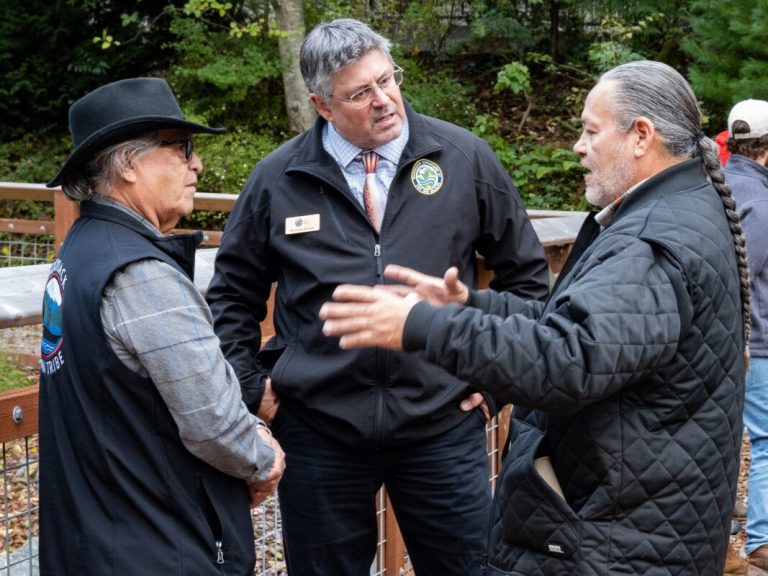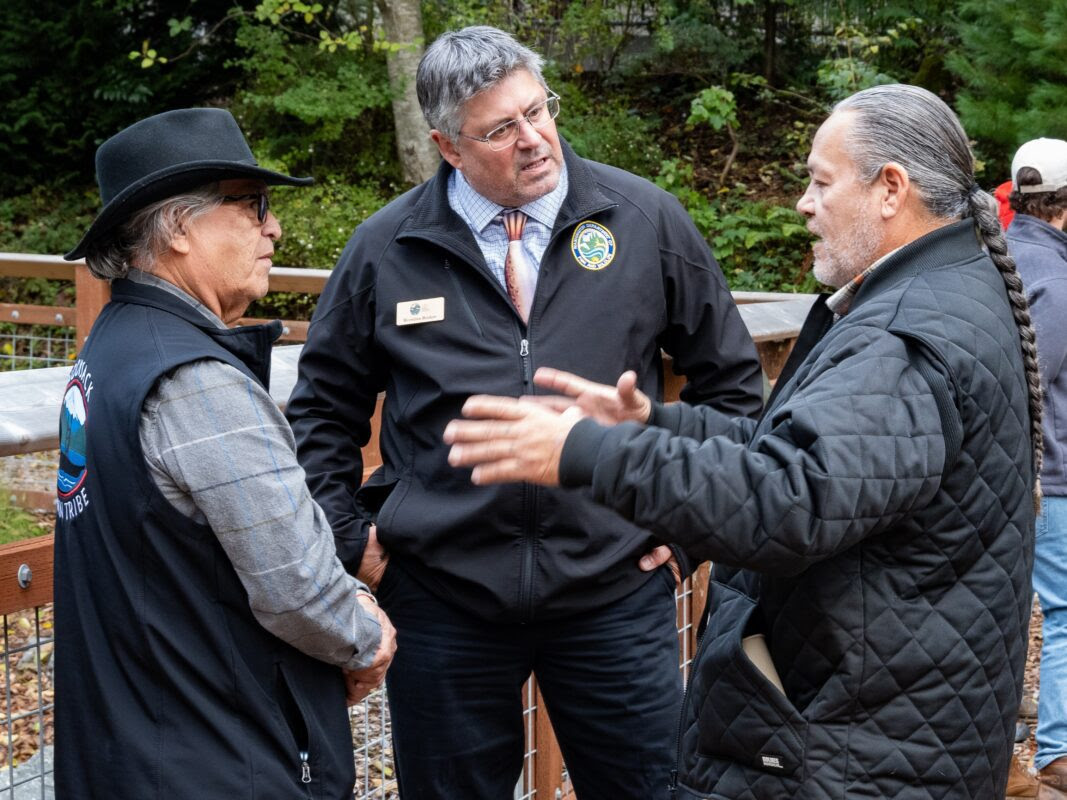
Nooksack Indian Tribe Cultural Resources Director George Swanaset Jr., right, speaks with Nooksack Chairman Ross Cline Sr., left, and WDFW North Puget Sound Regional Director Brendan Brokes, center, about efforts to restore salmon habitat. (Photo: Northwest Indian Fisheries Commission)
BELLINGHAM, Wash. — Lummi Nation, the Nooksack Indian Tribe, state wildlife officials and the City of Bellingham have agreed on a coordinated plan to remove barriers that prevent salmon from reaching local streams.
The four partners signed a new Memorandum of Agreement in October. It establishes priorities and a timeline for addressing City-owned culverts that block or restrict fish passage.
The agreement builds on years of collaboration between the Tribal Nations and government agencies. Officials celebrated the signing Oct. 29, 2026, during a visit to two recently completed fish passage projects on Padden Creek.
“We are fishing tribes. I’m glad to see this happening. We have rights to protect the salmon, protect the habitat.”
— Merle Jefferson Sr., Director, Lummi Nation Natural Resources Department
The agreement replaces an earlier memorandum signed in 2022 and formally adopts an implementation plan the partners developed in 2025. The plan establishes a prioritized schedule for addressing barriers owned by the City of Bellingham.
Prioritizing fish passage projects
The partners used an inventory of City-owned fish passage barriers to identify and rank projects based on their potential benefits to fish and their cultural significance.
The approach prioritizes improvements that reconnect salmon habitat and improve access for culturally and economically important salmon returning to Tribal Usual and Accustomed fishing areas.
Nooksack Indian Tribe Cultural Resources Director George Swanaset Jr. said salmon recovery involves restoring more than fish populations. Salmon remain central to Tribal culture and support a broader ecosystem.
“We are always trying as a tribe to bring back our salmon. Salmon are a placeholder for our culture.”
— George Swanaset Jr., Cultural Resources Director, Nooksack Indian Tribe
He described how the loss of wildlife and natural sounds over the years reflected broader changes in the environment.
“But then with work like this, it brings it all back. It brings back our way of life.”
— George Swanaset Jr., Cultural Resources Director, Nooksack Indian Tribe
Agreement recognizes Tribal treaty rights
The memorandum recognizes the treaty-reserved fishing and fisheries co-management rights held by Lummi Nation and the Nooksack Indian Tribe within their Usual and Accustomed fishing grounds.
Those rights include a sharing agreement for half of the harvestable salmon. Both Tribes also assert federal reserved water rights within the Nooksack River basin.
The City of Bellingham has responsibility for designing, building and maintaining roads and culverts where they intersect with local streams.
Bellingham Mayor Kim Lund said the agreement turns shared commitments into a coordinated plan for improving fish habitat while recognizing Tribal cultural connections and treaty rights.
“By working together, we’re able to advance solutions that honor deep cultural connections, uphold Treaty rights, support salmon recovery, and make the best use of public resources.”
— Kim Lund, Mayor of Bellingham
The agreement also establishes timelines and progress-tracking measures intended to provide transparency and maintain accountability among the partners.
Officials say the coordinated approach could strengthen future applications for state, federal and competitive grants to fund additional fish passage improvements.
Padden Creek projects demonstrate progress
The partners marked the agreement with a visit to two fish passage projects completed on Padden Creek in spring 2026.
The projects demonstrate the type of work the new agreement aims to advance by removing City-owned barriers and improving access to stream habitat.
“It’s very historical today. To see what can happen in two years, this is great for our fish.”
— Jesse Madera, Nooksack Tribal Council Member
Washington Department of Fish and Wildlife North Puget Sound Regional Director Brendan Brokes described the agreement as an example of how voluntary cooperation can accelerate habitat restoration.
“This MOA demonstrates how voluntary, collaborative planning can move quickly to support reconnecting habitat and restoring ecological functions, which supports healthy salmon runs, communities, and tribal nations.”
— Brendan Brokes, North Puget Sound Regional Director, Washington Department of Fish and Wildlife
Lummi Indian Business Council member Tanesha Lane emphasized the importance of continued cooperation.
“We’ve got to keep fighting for the fish, but fighting together.”
— Tanesha Lane, Lummi Indian Business Council
The agreement brings together Lummi Nation, the Nooksack Indian Tribe, the Washington Department of Fish and Wildlife and the City of Bellingham around a shared plan for addressing fish passage barriers and supporting long-term salmon recovery.
Frequently Asked Questions
About the Author