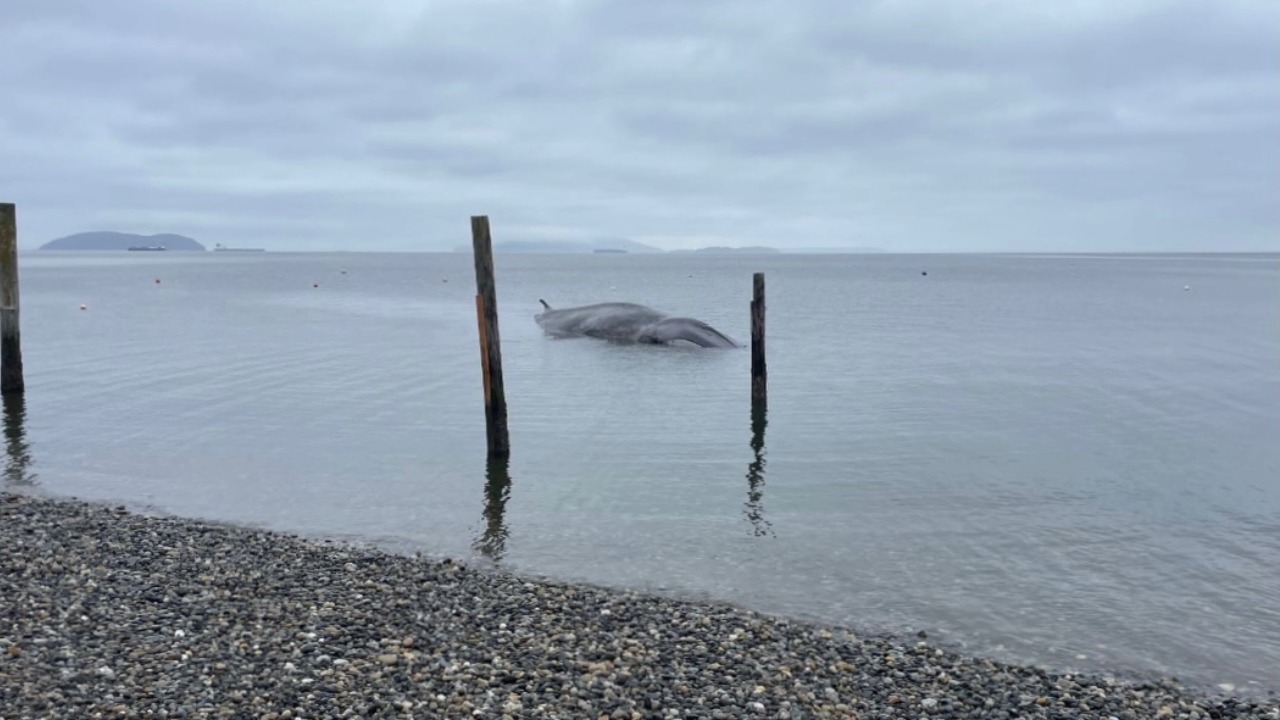
A 61-foot fin whale stranded and died near Samish Island. Washington has lost at least 18 whales in 2026, far above normal. Researchers blame malnutrition. (Picture: NOAA Fisheries West Coast)
BELLINGHAM, Wash. — A subadult male fin whale died after stranding on a gravel beach near Samish Island.
The death prompted a coordinated response from regional marine mammal experts and adds to a growing number of whale deaths in Washington waters this year.
“The whale was alive when it initially stranded on a gravel beach on Monday night, but died when responders were on their way to the scene,” NOAA Fisheries West Coast said Tuesday. “The whale measured just over 61 feet long and weighed about 40 tons.”
Teams from the Central Puget Sound Marine Mammal Stranding Network, Cascadia Research Collective, and the Washington Department of Fish and Wildlife responded Tuesday morning. Officials found the animal in poor condition. “Its overall condition had deteriorated and it was emaciated,” they said. “Fin whales are the second largest animal on earth after blue whales, which limits the options for moving or freeing stranded animals.”
Following a necropsy, responders plan to leave the carcass in place to decompose naturally. That is standard practice for large whale strandings when removal is impractical.
Rising Whale Deaths in Washington
This incident comes amid what researchers describe as an alarming increase in whale mortality in Washington waters. As of early May, at least 18 whales have died. That total includes 17 gray whales and this single fin whale.
Notably, fin whales rarely appear in the inland Salish Sea. By comparison, typical years see only 5 to 6 gray whale deaths.
Scientists at Cascadia Research point to malnutrition as the leading cause. Specifically, many of the whales examined this year show signs of emaciation.
That pattern suggests they failed to acquire sufficient food in their Arctic feeding grounds. In addition, researchers note contributing factors in some cases. These include vessel strikes, entanglement in fishing gear, and strandings in unusually shallow or confined areas.
Fin whales are the second largest animal on earth after blue whales, which limits the options for moving or freeing stranded animals.
— NOAA Fisheries West Coast
Public Safety Reminder
Officials urge the public to report stranded or injured marine mammals to the regional Stranding Network hotline at 1-866-767-6114. Furthermore, they warn that live stranded whales can be dangerous and unpredictable.
As a result, only trained responders should approach or attempt to assist large marine mammals onshore.
Meanwhile, necropsy results from the Samish Island fin whale are pending. Those findings will provide additional insight into the animal’s condition and the broader mortality trend affecting whales in the region.
Frequently Asked Questions
About the Author