

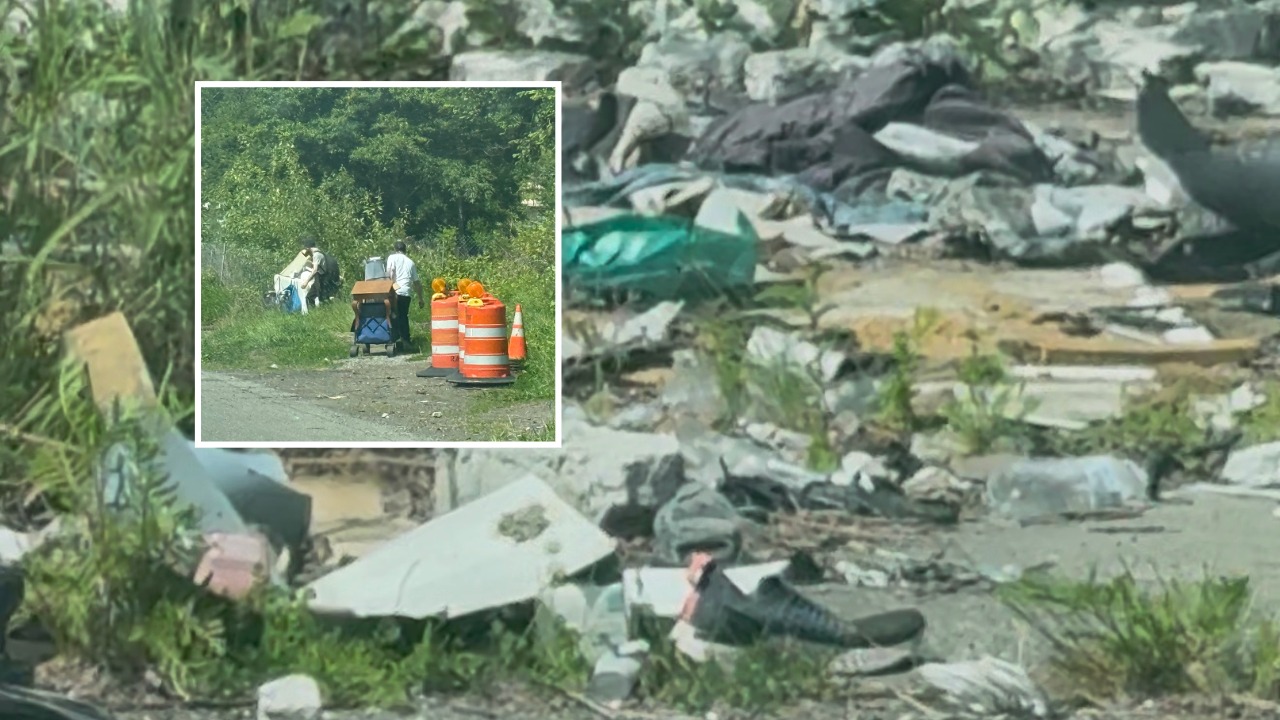
PNW Daily footage showing furniture moving into the King Mountain encampment sparked community debate over enforcement, housing and mental health resources in Bellingham. (Photos: PNW Daily)
BELLINGHAM, Wash. — Public reaction to footage showing furniture being hauled into the King Mountain encampment has sparked a wave of concern from Bellingham residents. The response highlights a growing divide between calls for stronger enforcement and demands for more housing, mental health treatment and shelter options.
PNW Daily published the video Monday. It showed individuals moving couches, chairs, dressers and other household items deeper into the encampment as city officials continue to promise action at the site this summer.
For residents who live near the sprawling encampment east of Meridian Street and north of East Kellogg Road, the footage reinforced longstanding concerns. Many say the camp keeps growing despite years of legal battles, cleanup efforts and neighborhood complaints.
Residents Describe Fear, Frustration
Kathy Bechtol lives on East Kellogg Road. She said nearby property owners and managers have spent years trying to protect their properties from encampment-related impacts.
“Our on-site manager has been to the city council meetings and gone to the police before and she and her husband and staff have patrolled our property over the last few years, until we hired nightly security,” Bechtol wrote in an email to PNW Daily.
She said fences and no-trespassing signs now line nearby properties as the encampment has expanded.
It is becoming scary to hear screams and yelling during the night and wondering if you are hearing a car backfire or a real gunshot.
— Kathy Bechtol, East Kellogg Road resident
The concerns are not new. In recent years, residents have repeatedly raised alarms about thefts, fires, trespassing and public safety issues linked to the encampment. Still, Bechtol said enforcement alone will not solve the problem.
“I am not sure what the city is planning to do, but affordable housing, compassion and access to mental health services need to come together,” she said.
Another resident who contacted PNW Daily after seeing the footage raised a different question.
“I saw them by the car wash on the Guide making their way to the camp,” the resident wrote. “I just wanna know where they got that stuff? It all looked pretty nice.”
Community Divided on Solutions
Comments on PNW Daily’s Facebook page reflected the broader debate playing out across Bellingham.
“Shaming them isn’t the answer,” resident Russ Dzialo wrote. “They need safe homes. Pallet homes with supervision and low barrier rules would be an improvement and potentially get them to accept the treatment programs they need.”
Others argued the impacts on nearby residents have gone on far too long.
“Simply put this has been going on for many years in this location,” Jane Ayers Larrabee wrote. “I helped build the Spring Creek and King Mountain developments and my son helped build the town houses. Over the years tens of thousands of dollars in tools were stolen by the people living in the encampment.”
City Promises Summer Action
The renewed debate comes as Bellingham officials say they remain on track to take action on the King Mountain encampment this summer. Mayor Kim Lund previously called the site a “very legitimate public safety concern” during a March community meeting with King Mountain residents.
The city has spent years pursuing legal action against Taiwan-based property owner Li-Ching Fang, whose land contains much of the encampment. Courts have ordered Fang to pay more than $242,000 in cleanup costs. Additionally, city estimates place full cleanup and environmental remediation of her property at between $4 million and $6 million.
The encampment extends across multiple public and private parcels, however, limiting what the city can do without cooperation from other landowners. As of Tuesday, the city had not publicly released a detailed timeline for the promised summer response.
County Plan Calls for More Shelter, Tiny Homes
The debate also comes as Whatcom County prepares to implement its new five-year Homeless Housing Plan covering 2026 through 2030. The plan identifies reducing unsheltered homelessness as a primary goal and calls for expanding shelter capacity throughout the county.
Among the projects in the plan are a new 30-unit tiny home village, a new 60-bed low-barrier shelter with daytime services, additional severe weather shelter capacity and expanded rapid rehousing and permanent supportive housing programs.
County data shows 815 people experienced homelessness during the 2025 Point-in-Time Count. Of those, 337 lived unsheltered. That represented a significant jump from 243 unsheltered individuals the previous year.
County officials argue housing affordability remains the primary driver of homelessness in Whatcom County. The plan also identifies behavioral health challenges, substance use disorders and gaps in the social safety net as contributing factors.
A Growing Gap
For many King Mountain residents, the debate is no longer about whether homelessness exists but how quickly the city and county can respond to its impacts.
The county’s plan outlines new shelter and housing investments through 2030. Nearby affordable housing projects, meanwhile, remain years away from completion.
New furniture continues arriving at the encampment today. That gap between long-term planning and immediate neighborhood concerns remains at the center of Bellingham’s King Mountain debate.
Frequently Asked Questions
About the Author




1 thought on “King Mountain Encampment Draws Fresh Debate Over Solutions”