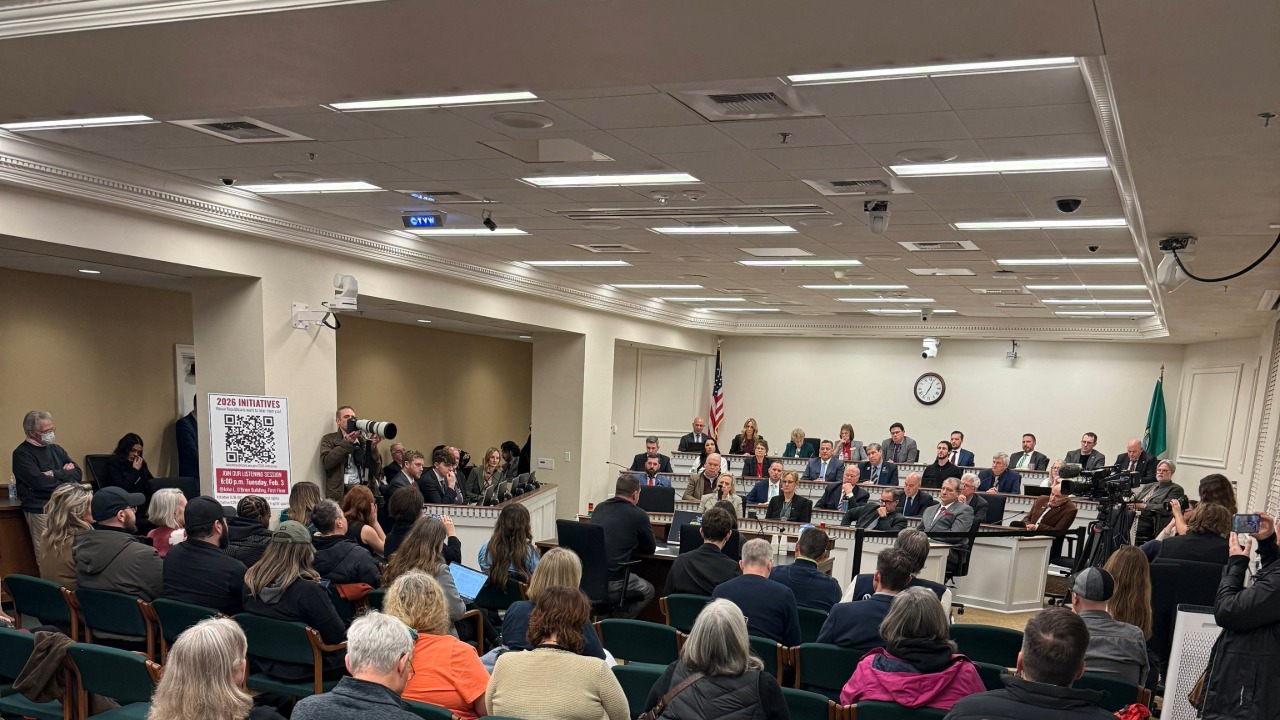
As hundreds pack the session, the turnout highlighted a growing dispute at the Capitol over whether legislative inaction is being used as a tool of governance. (Picture: WA House Republicans)
OLYMPIA, Wash. — Hundreds of people packed a Republican-led listening session this week focused on two citizen initiatives that state lawmakers have not formally considered, despite certification by the Secretary of State.
The turnout highlighted a growing dispute at the Capitol over whether legislative inaction is being used as a tool of governance.
The event, organized by the Washington State House Republicans, filled the room, according to photos shared by lawmakers. Organizers said the crowd reflected strong public interest in initiatives that remain stalled after clearing the signature threshold required to reach the Legislature.
Certified initiatives await action
In 2026, two initiatives to the Legislature received certification after sponsors submitted enough valid voter signatures. The Secretary of State then transmitted the measures to the House and Senate for consideration.
Under the Washington Constitution, initiatives to the Legislature must take precedence over other matters once certified.
The constitution gives lawmakers three options. They can enact an initiative as written. They can place it on the ballot for voters at the next general election. Or they can send it to the ballot with a proposed alternative.
So far, neither chamber of the Washington State Legislature has scheduled committee hearings or taken floor action on either initiative.
Listening session fills absence of hearings
House Republicans organized the listening session after the initiatives failed to advance through the formal legislative process. The event allowed the public to comment outside the committee system.
Unlike a legislative hearing, the session carries no authority to move legislation or force a vote.
Republican lawmakers say the lack of hearings or votes sidelines the initiative process without a direct decision by elected officials. They argue that allowing certified measures to sit idle conflicts with the constitution’s requirement that initiatives receive priority consideration.
Democratic leaders have not rejected the initiatives and have not questioned their certification. The majority caucus has not announced a timeline for hearings or other action.
What comes next
If lawmakers take no action, the initiatives will advance to the statewide ballot at the next general election. The Legislature could also choose to pass the measures or send voters an alternative proposal.
For now, the packed listening session reflects a procedural standoff at the Capitol. Lawmakers and citizens continue to debate whether declining to act can shape policy as much as a formal vote.
About the Author