

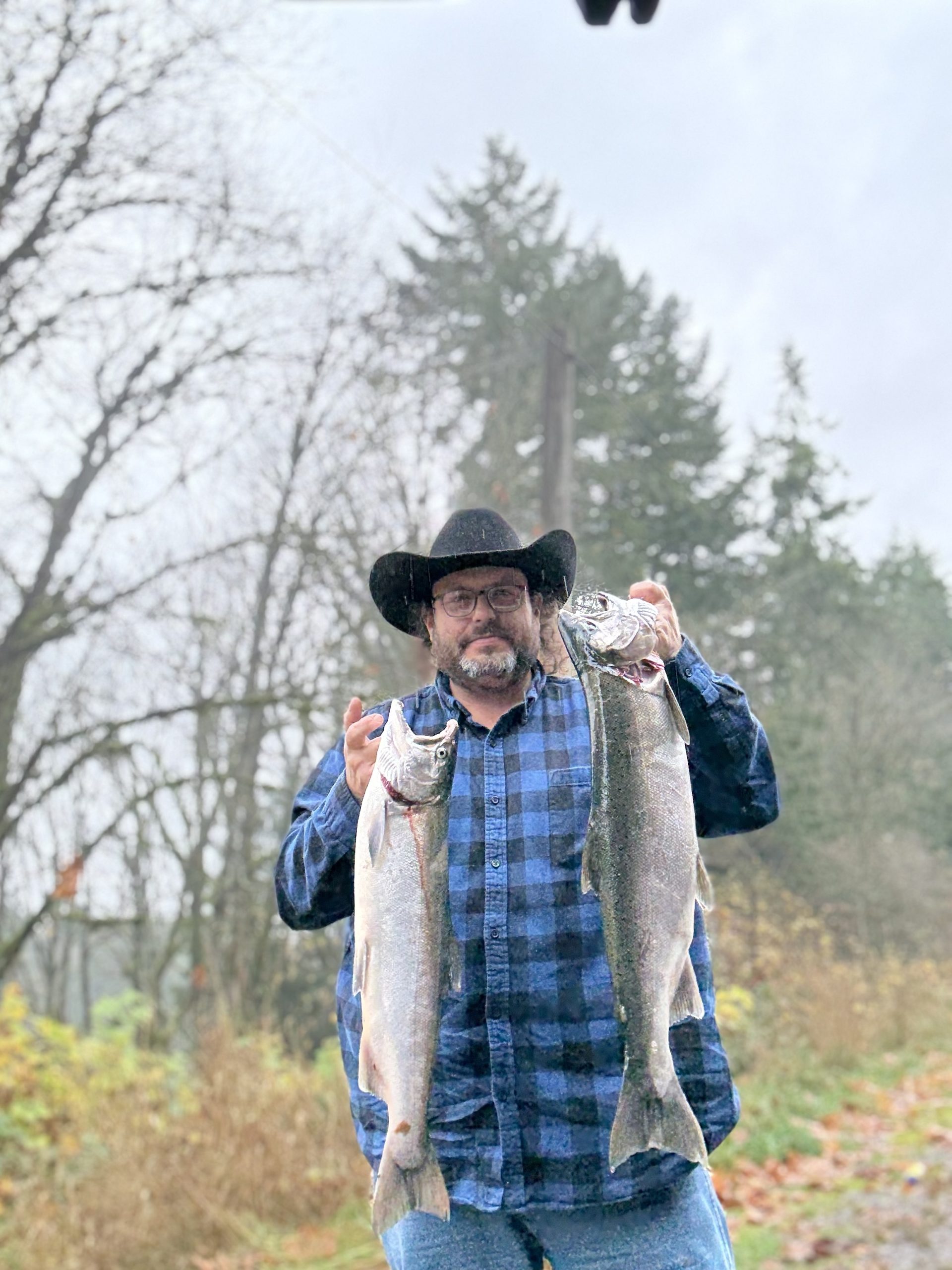
FERNDALE, Wash. — Weeks of flooding across Whatcom County left many rivers blown out for much of the 2025 salmon season, limiting opportunities and frustrating lifelong fishermen.
High water reshaped stretches of river near the Canadian border and damaged nearby neighborhoods. For anglers who consider the Nooksack home, the changes felt personal, even when reaching favorite spots now requires a drive from town.
With the Nooksack River coho season ending on Dec. 31, many anglers are closing the books on a year defined less by limits and more by conditions.
A Season Defined by Water, Not Fish
Flooding dominated the fall. Rivers stayed high, fast, and turbid for long stretches. As a result, coho fishing took a back seat for much of the season.
While the fish arrived, access did not follow.
For bank anglers and anyone without the flexibility to chase short windows between storms, opportunity remained limited. A strong return does not automatically create a productive fishery when water conditions consistently restrict visibility and safe access.
Strong Returns, Limited Opportunity
Despite the challenges, salmon returns across the region came in strong. Coho, chum, and pink salmon all showed up in solid numbers.
Chinook arrived early, riding in on high water. However, the state restricted fishing in shallow upriver areas, keeping anglers from accessing them.
Sockeye also appeared in numbers rarely seen in decades. Though official tracking remains limited, multiple anglers reported sightings and catches near the forks. I caught one myself shortly after the forks opened and another on the North Fork just before the sudden closure. One young angler even landed a sockeye on a Dick Nite spinner along the edge of a coho and chum holding area.
It was, by any measure, a strange year.
Coho Returns Met Expectations
Despite poor conditions, coho remained present throughout the system. Fresh pushes followed rain events, and angler reports across Whatcom County matched hatchery data showing consistent movement.
Preliminary in-season figures from the Washington Department of Fish and Wildlife indicate a strong 2025 coho return, driven largely by hatchery-origin fish.
At Kendall Creek Hatchery, staff recorded more than 15,000 adult and jack coho by mid-December. Hatchery fish made up most of the run, with a smaller but measurable wild component.
Anecdotally, my own catch record showed the opposite. I landed very few hatchery fish. I avoid bait, stick to hoochie spinners and soft beads under a bobber, and twitch soft plastics early in the season.
Once chum arrived, coho shifted into areas that required more movement—tight drifts near log jams, rock walls, and deeper structure. Bank twitching gave way to wading and covering water.
Whatcom Creek’s Limited Role
As in most years, Whatcom Creek contributed only a small portion of overall coho escapement.
Returns there remained low relative to the mainstem Nooksack system. That pattern once again underscored Kendall Creek’s role as the backbone of basin-wide coho production.
Access, Effort, and Reality on the River
For many anglers, the 2025 season came down to missed chances.
High water reduced overall effort. Storm cycles shrank already-narrow windows. Even on days when fish pushed in, visibility often remained poor.
The fish showed up. The water dictated the terms.
Looking Ahead to 2026
The takeaway from the 2025 salmon season is mixed but clear:
- Coho returns improved over recent years
- River conditions sharply limited opportunity
- Hatchery production continues to drive the fishery
Final escapement numbers will arrive after the season officially closes, but the pattern has already emerged.
Commentary: A System at Odds With Itself
For many anglers, the 2025 salmon season reinforced a hard truth: fish when you can, where you can. Closures now arrive quickly, often without warning. That reality explains why WDFW continues to lose lawsuits to wild fish conservancy groups.
Too many hatchery fish now spawn alongside wild fish. This practice dilutes the gene pool when seasons close early or unpredictably. That outcome violates both science-based management principles and common sense.
Washington’s fisheries management system is structurally biased toward legal risk avoidance and bureaucratic incentives rather than maximizing public fishing opportunity. This results in predictable underutilization of hatchery fish, misleading public narratives about “conservation necessity,” and the monetization of surplus fish through contracts after anglers are excluded.
Meanwhile, license fees have risen 38 percent. Discover Pass fees jumped 50 percent. Yet anglers see fewer services, less access, and shrinking opportunity.
Officials often cite floods as justification for closures. But the 2021 floods did not hurt this year’s coho, chum, or pink returns. Agencies will almost certainly use the 2025 floods to justify future restrictions.
Steelhead: The Crisis No One Wants to Address
Steelhead numbers collapsed this decade on the Nooksack.
Ocean conditions play a role. So does commercial overfishing. Alaskan trawlers matter too. But management decisions on the river also deserve scrutiny.
Anglers can still fish with bait and barbs year-round in some stretches. Many treat wild rainbows on the Nooksack the same way they treat stocked trout at Lake Padden. That behavior shows.
Visit VanderYacht Park or Frog Pond in August. You will see people throwing Blue Fox spinners with trebles while soaking PowerBait on a second rod.
This is a textbook example of the Tragedy of the Commons. People overexploit a shared resource while ignoring their own impact.
Misunderstanding Tribal Stewardship
One of the most frustrating things I heard this year: “The tribes are catching them, so why can’t we?”
That misled logic misses the point.
Tribal stewardship focuses on sustaining fish populations for generations yet unborn. That long view defines their management philosophy.
We Don’t Need Bigger Limits, We Need Access
The Nooksack never needed six-fish limits. It needed opportunity.
High limits drew crowds from three counties away. The result? Packed banks, unsafe behavior, and worse etiquette.
If the goal is conservation, the state should make river trout fishing barbless and fly-only. Let bait anglers fish the lakes we stock with eaters.
The Bottom Line
We must work together to protect Nooksack steelhead, preserve access, and demand science-based management.
Right now, special interests shape too many decisions. That approach hurts fish, anglers, and communities alike.
About the Author



2 thoughts on “Nooksack River 2025 Salmon Season Defined by High Water”