

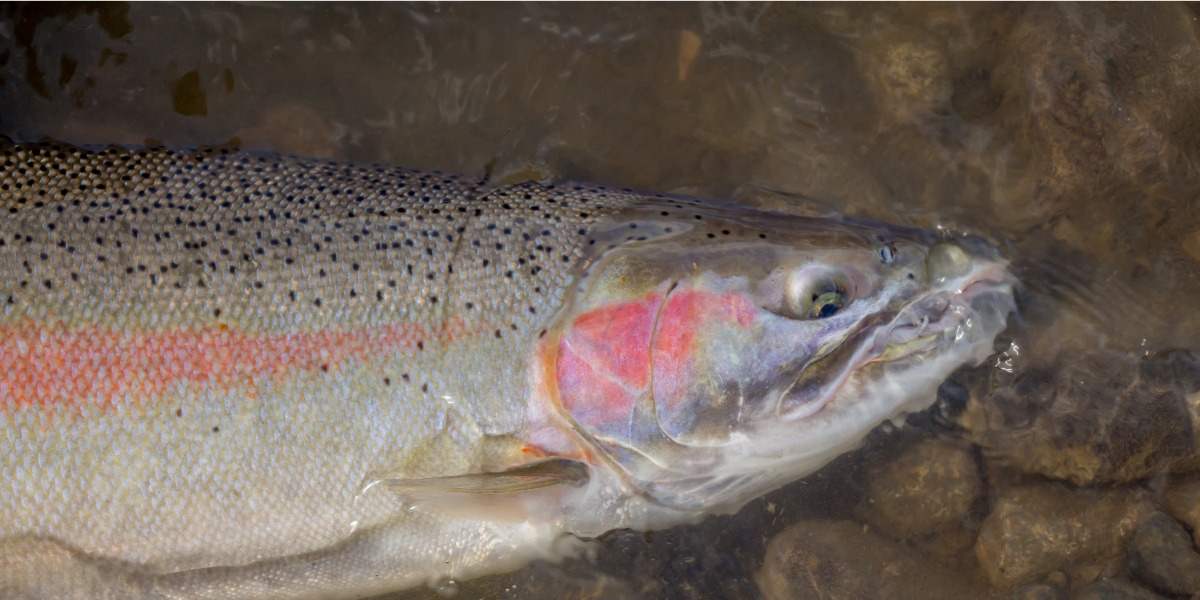
As the Nooksack River closes to fishing, winter is settling into its familiar rhythm across Northwest Washington with fisherfolk shifting their focus to early-returning hatchery steelhead.
After weeks of rain and blown-out conditions, many rivers are now fishable again, and the timing lines up with the peak return window for early-winter steelhead. These fish love running in packs making hatchery-adjacent stretches some of the most consistent options of the season.
But so far, emergency rules to open some of our favorite winter steelhead rivers have not yet been announced.
What is Actually Open?
On the upper west side, that means attention turns to well-known winter staples:
The Skykomish near Reiter Pond.
The Wallace River below Wallace Hatchery.
Tokul Creek and nearby sections of the Snoqualmie.
The North Fork Stillaguamish around the Fortson Hole release site.
These areas concentrate fish and anglers alike. When flows cooperate, steelhead often stack up close to the hatchery outlet, with pockets of holding water extending just upstream and downstream.
While there is no longer a hatchery on the river system, the Sauk River is open for retention of two hatchery steelhead. I stick to soft beads and catch whitefish, trout and dolly varden more than anything else, but I usually fish the Sauk and the Stilly near Fortson in a loop.
Honestly, with the high water hatchery fish will be everywhere so if it is open near you, toss out some soft beads or light jigs under a clear bobber.
A Short Window That Rewards Timing
Early-winter hatchery steelhead typically arrive from late November through mid-January, creating a relatively short but popular fishery that carries many anglers through the holidays and into the new year.
Success often comes down to timing and presentation. Smaller offerings tend to shine in winter conditions, whether that’s jigs under a float, beads and rubber worms, spoons, or flies. When fish are present, they’re usually willing, but winter steelhead still demand patience between bites.
Some terminal hatchery areas remain open into early February, though regulations vary by river. Checking current rules before heading out is essential, especially as emergency changes aren’t uncommon during winter.
More Than Just Steelhead
Steelhead may be the headline act, but they aren’t the only option as winter deepens.
Sea-run cutthroat trout continue to move through North Puget Sound rivers, often holding tight to structure like cutbanks and logjams. They offer a lighter-tackle alternative when steelhead crowds thin or conditions aren’t ideal.
Lowland lakes remain another steady choice. Many stay open year-round, and recent trout plants can provide surprisingly good fishing even in cold weather.
Although known as a kokanee lake, Lake Samish is open year round and has smallmouth and largemouth. It’s an amazing lake for drop shot masters on the south end and pitching at docks.
Saltwater anglers aren’t left out either. Flounder, seaperch, and other bottomfish are available year-round in much of Puget Sound, and winter is also a productive time for chasing sea-run cutthroat along beaches, in bays, and throughout Hood Canal as cooler water pushes fish into predictable patterns.
About the Author



1 thought on “The Hunt For Steel Begins”