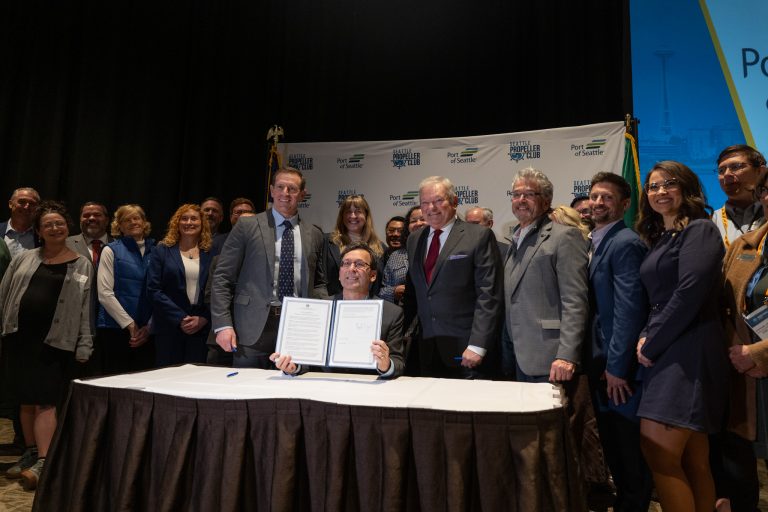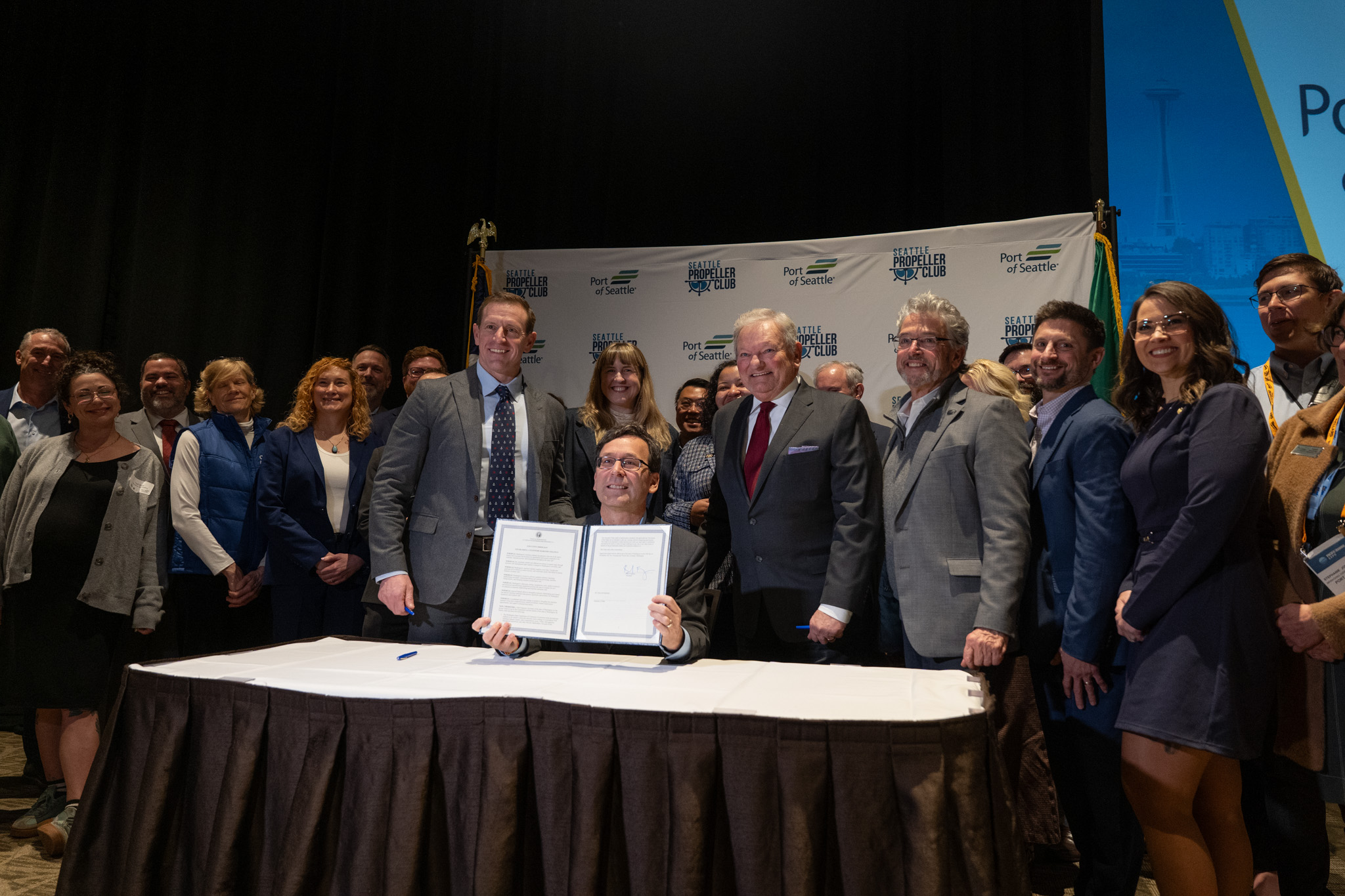
Governor Ferguson signs his Maritime Sector Strategy Executive Order on Friday, Nov. 20, 2026. (Photo: Office of the Governor)
SEATTLE, Wash. — The future of Washington’s working waterfronts, shipyards and commercial fishing industry will be the focus of a new statewide strategy Gov. Bob Ferguson wants completed by fall 2027.
Ferguson signed an executive order Friday, Nov. 20, directing the Washington State Department of Commerce to bring together maritime businesses, labor organizations, ports, Tribes and educational institutions to develop a plan for the industry’s future.
“Washington’s maritime sector is a cornerstone of Washington’s economy. To continue our success, we need to take action to position our maritime sector to lead in the future. Bringing everyone to the table and coordinating a cohesive strategy is a simple but powerful step to reaching that goal.”
— Gov. Bob Ferguson
The initiative will examine how Washington can expand shipbuilding and vessel repair, modernize port infrastructure, grow commercial fishing and seafood production, and compete in an evolving global maritime economy.
The executive order directs the department to coordinate with maritime industry stakeholders and publish the statewide strategy by Sept. 30, 2027.
Strategy Targets Shipbuilding, Fishing and Port Infrastructure
The strategy will identify opportunities to strengthen Washington’s competitiveness in the maritime industry and attract new investment. It also will examine ways to expand shipbuilding, vessel repair and maritime manufacturing.
Infrastructure is another central focus. The state will evaluate options to modernize aging facilities, preserve industrial lands, improve freight connections and strengthen supply chains.
The order also identifies several other priorities:
- Accelerate the transition to lower-emission vessels, terminals and maritime fuels.
- Expand maritime workforce development and support emerging technologies.
- Grow commercial fishing, seafood processing and aquaculture.
- Improve port, shipyard and working waterfront capacity and resilience.
- Identify opportunities to streamline permitting while maintaining environmental and worker protections.
- Build international partnerships with maritime innovators, particularly in Pacific Rim and Nordic countries.
The effort follows recommendations from Ferguson’s Economic Development Council, which he established in June. The council brings together representatives from small businesses, labor, Tribes, education, technology and aerospace to help guide the state’s broader economic development strategy.
Finland and Denmark Partnerships Included
Washington’s international maritime ambitions also include recent agreements with Finland and Denmark.
Ferguson recently signed memorandums of understanding with both countries. The agreements include provisions for cooperation involving Washington’s maritime industry.
The executive order specifically identifies Pacific Rim and Nordic nations as potential partners in advancing maritime innovation and expertise.
Permitting Reform Part of Broader Effort
The maritime strategy also addresses permitting and regulatory processes, an issue Ferguson has made a priority during his administration.
The governor said state agencies have reduced processing times for several types of licenses and registrations following an executive order signed on his first day in office.
According to the governor’s office:
- The Department of Licensing reduced average processing times across 340 licenses and permits from 46 days to 25 days.
- The Department of Labor and Industries cut processing times for new contractor registrations from 12 weeks to three weeks.
- The Department of Financial Institutions reduced franchise application processing times from 17 days to eight days.
Earlier this month, Ferguson signed another executive order launching a broader regulatory reform initiative. It directs state agencies to review existing regulations and identify unnecessary requirements, administrative burdens and opportunities for modernization.
That order also established a six-month pause on new agency rulemaking, with certain exceptions.
The new maritime order applies those permitting and regulatory concerns to an industry that depends on ports, shipyards, waterfront facilities and related infrastructure.
Frequently Asked Questions
About the Author