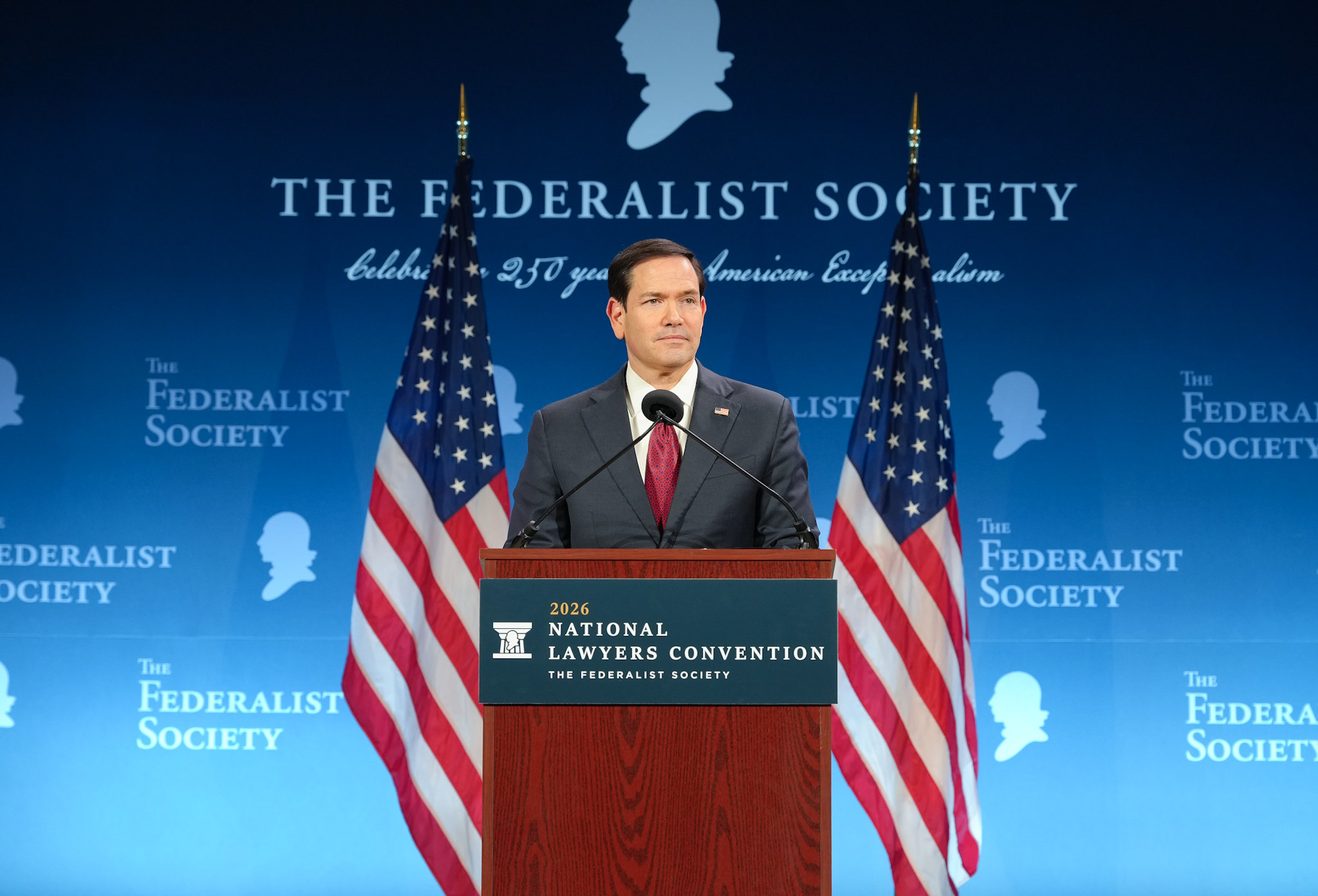
Secretary Marco Rubio delivers a keynote address at the Federalist Society National Lawyers Convention at The Mayflower Hotel in Washington, D.C., November 13, 2026. (Official State Department photo by Freddie Everett)
WASHINGTON D.C. — Cybercriminals are increasingly using artificial intelligence to automate sophisticated cyberattacks, potentially moving from initial targeting to privileged access inside business networks in less than three hours, according to a new FBI warning.
The FBI issued a FLASH cyber threat advisory warning that hackers and state-aligned threat actors are exploiting an autonomous penetration-testing framework called ARTEX to conduct attacks against businesses, government agencies and organizations worldwide.
The warning comes amid a series of technology disruptions affecting major U.S. services, including Microsoft 365, the Federal Aviation Administration and banking systems. However, federal officials have not connected those disruptions to ARTEX or identified them as coordinated cyberattacks.
The FBI’s advisory specifically addresses the growing threat posed by automated hacking tools, not the recent service outages. Late Tuesday evening, Secretary of State Marco Rubio made an impromptu statement that the federal government has no evidence linking a series of major technical outages that disrupted Americans over the past week.
“The first thing I want to make very clear is that we have zero evidence whatsoever, we have no indication, no evidence, and no reason to believe at all that any of these incidents are related to each other,” Rubio said.
AI Framework Accelerates Cyberattacks
ARTEX is an open-source platform powered by large language models (LLMs) that uses autonomous artificial intelligence agents to carry out multiple stages of a cyber intrusion.
Rather than requiring hackers to manually perform each step, the framework translates instructions into commands that can automate reconnaissance, identify vulnerabilities, exploit weaknesses, establish access and prepare stolen information for removal.
The FBI said some intrusions have progressed from initial targeting to privileged network access in less than three hours.
The framework also lowers the technical barrier for cybercriminals. Attackers with limited technical expertise can use ARTEX to coordinate sophisticated operations against multiple organizations simultaneously.
According to the FBI, malicious actors have used the framework since at least August 2026 to target organizations across several industries, including financial services, government, technology, defense, energy, health care, manufacturing and telecommunications.
One documented campaign targeted South Korean financial institutions and resulted in the theft of personal information belonging to approximately 67,000 people.
Another involved a supply-chain compromise affecting ConnectWise Cloud Backup customers. The incident included attempted authentication against more than 2,250 downstream customer environments.
Removing ARTEX Did Not Stop Its Spread
The original ARTEX developer removed the project’s GitHub repository Oct. 8, following reports that threat actors were abusing the technology.
However, the FBI said the framework remains available through independently maintained versions, archived copies, community-developed versions and a commercial offering called ARTEX PRO.
Researchers identified more than 1,600 publicly accessible ARTEX console instances in early November. The FBI believes the actual number of deployments is considerably higher when private networks and systems behind firewalls are included.
The framework does not contain its own artificial intelligence model. Instead, it connects to external AI services, including models from OpenAI, Anthropic, DeepSeek and other providers.
The FBI said attackers have used these models to coordinate specialized agents that perform different stages of an intrusion.
Recent U.S. Outages Not Linked to FBI Warning
The timing of the FBI advisory may raise questions about whether ARTEX or other cyberattacks played a role in recent disruptions affecting major U.S. services.
However, available findings point to separate technical problems.
Microsoft attributed its Microsoft 365 disruption, which began Nov. 12, to a technical issue involving network capacity and server infrastructure. The company specifically said the incident was not related to cyber activity or artificial intelligence agents.
The FAA also reported no indication that a cyberattack caused its nationwide flight ground stop Nov. 13.
In a Nov. 15 update, the FAA said its legacy telecommunications equipment became unstable after an unusually high volume of connection attempts flooded its network. The agency identified potential problems involving a radar site in Texas and a radio communications site in Arkansas, where a network router had recently been installed. The FAA and its network provider continued investigating the underlying cause.
Banking disruptions reported Nov. 16 also involved a separate technical problem. JPMorgan Chase attributed transaction delays affecting its systems and other financial institutions to a software bug in its on-premises hardware. The bank said the problem was not cyber-related.
Federal officials have not identified a connection between these incidents and the ARTEX activity described in the FBI advisory.
FBI Urges Businesses to Strengthen Security
The FBI is urging businesses and organizations to review their cybersecurity practices, particularly those operating internet-facing applications, customer portals, cloud infrastructure and systems connected to outside vendors.
The advisory recommends several immediate precautions:
- Review external access: Identify internet-facing applications, partner portals, supplier systems and other services that could provide an entry point into business networks.
- Strengthen access controls: Limit administrative privileges and restrict sensitive systems to trusted networks.
- Monitor suspicious activity: Watch for unusual authentication attempts, automated requests, unexpected account changes and unusually large data transfers.
- Protect cloud accounts: Review Microsoft 365 and other cloud environments for unfamiliar applications, unauthorized credentials and suspicious access permissions.
- Preserve security records: Maintain authentication logs, application records and other evidence that could help identify a compromise.
The FBI also encourages organizations to report suspected cybercrime through its Internet Crime Complaint Center.
Businesses that identify suspicious activity or believe their systems may have been compromised can submit reports through IC3.gov or contact their local FBI field office.
The complete FBI advisory, FLASH-20261113-001, is available through the agency’s cyber threat intelligence publication.
Frequently Asked Questions
About the Author