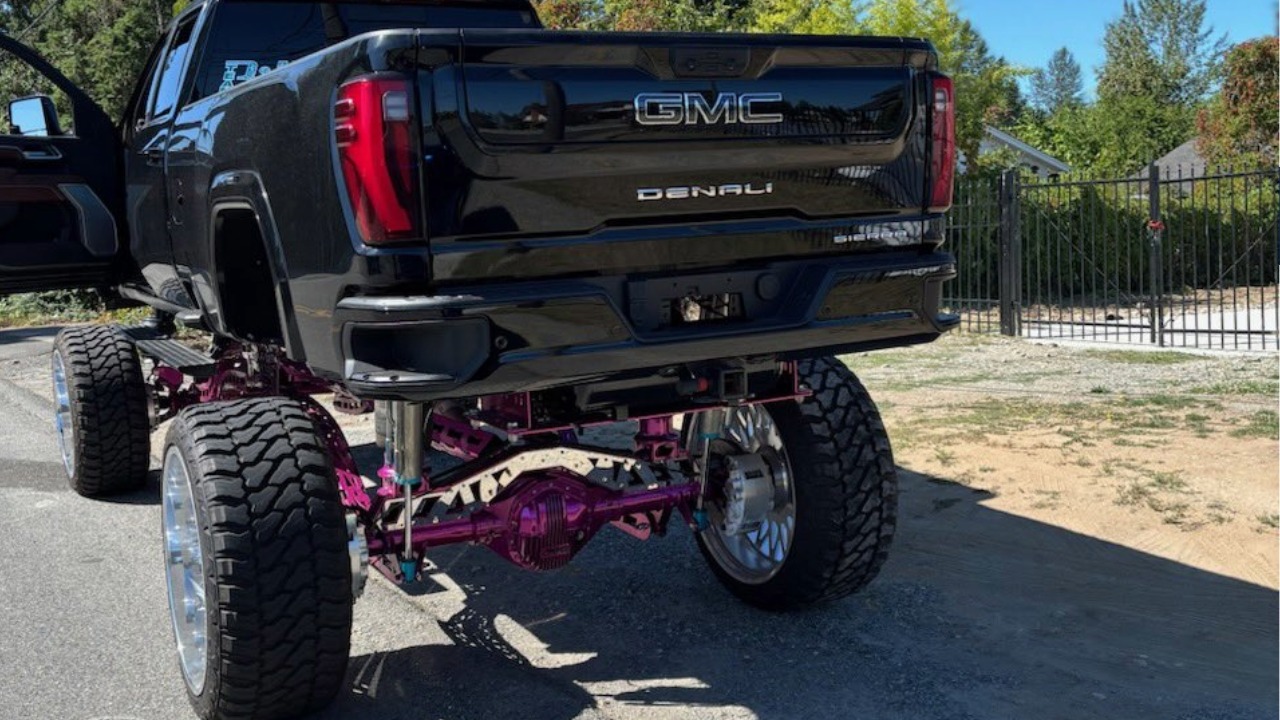
A heavily lifted GMC Denali sits along a Washington roadway after Trooper Southard stopped the driver for what WSP described as numerous equipment violations. Washington regulates bumper height, suspension lifts, tire coverage, mud flaps and lighting on modified vehicles. (Photo courtesy of Trooper Kameron Watts/Washington State Patrol)
WASHINGTON — A towering lifted GMC pickup caught a Washington State Patrol trooper’s attention Wednesday, leading to a traffic stop for what WSP described as numerous equipment violations.
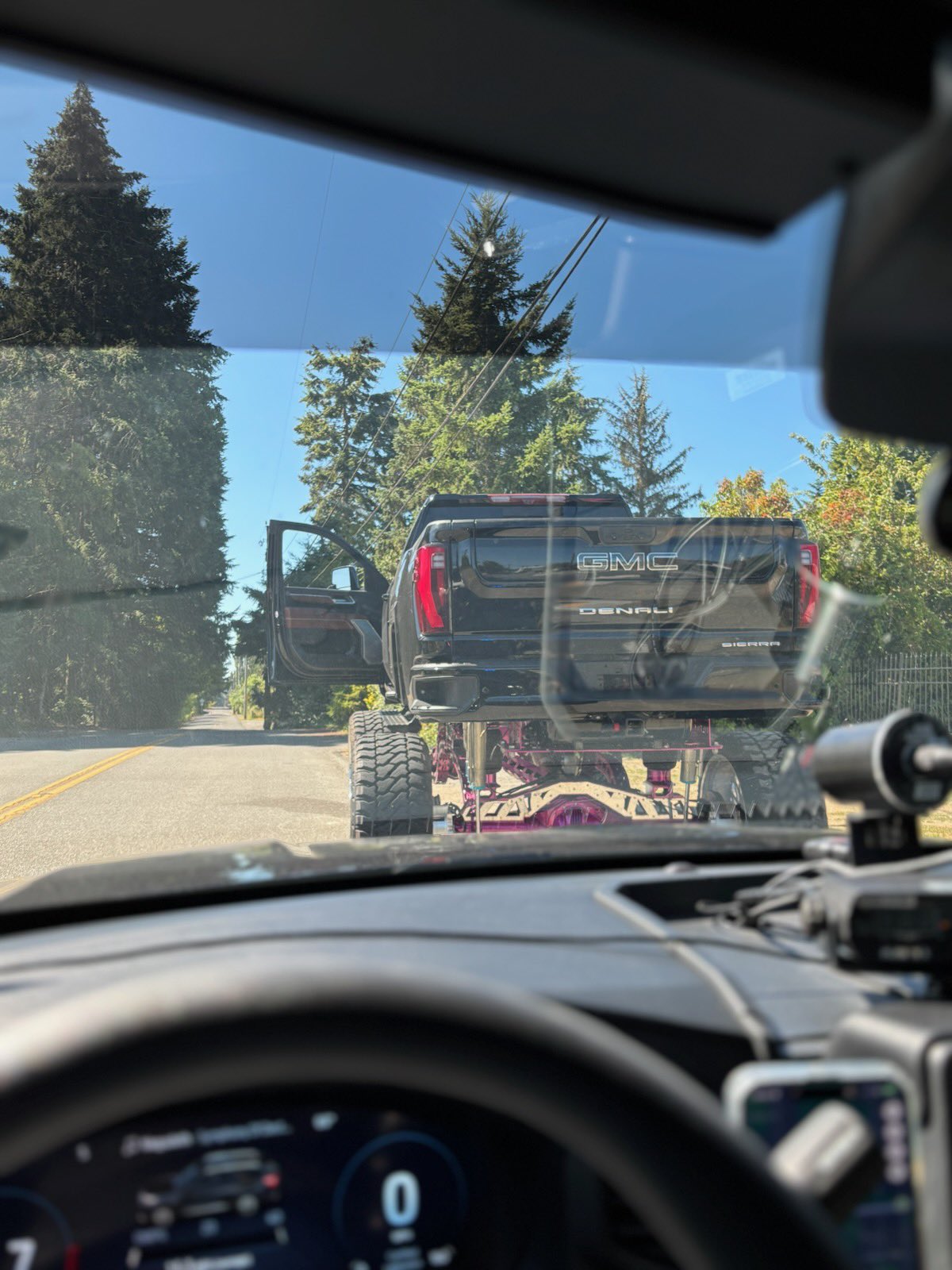
Trooper Kameron Watts shared a photo of the truck after Trooper Southard stopped its driver. WSP did not disclose where the stop occurred or identify the specific violations cited.
“But the takeaway is, with any vehicle modifications, take heed to equipment requirements such as bumper height, mud flap requirements, lights, etc. before operating on the roads.”
Trooper Kameron Watts
The photo shows a heavily lifted GMC Denali with oversized wheels and tires. However, a photograph alone cannot establish which equipment violated state law. Measurements, the truck’s gross vehicle weight rating and an inspection would determine whether individual modifications complied with Washington requirements.
Washington Bumper Height Limits
Washington sets maximum bumper heights according to the vehicle type and its original gross vehicle weight rating. Officials measure from a level surface to the highest point along the bottom of the bumper.
Under WAC 204-10-022, the maximum heights are:
| Vehicle Classification | Front Bumper | Rear Bumper |
|---|---|---|
| Passenger vehicles | 22 inches | 22 inches |
| Trucks weighing 4,500 pounds or less | 24 inches | 26 inches |
| Trucks weighing 4,501 to 7,500 pounds | 27 inches | 29 inches |
| Trucks weighing more than 7,500 pounds | 28 inches | 30 inches |
The rule uses the manufacturer’s original GVWR, not the truck’s current weight. In addition, owners cannot install a blocker beam or secondary bumper solely to satisfy the height requirement.
Bumpers generally must stand at least 4.5 inches vertically, span at least the vehicle’s wheel-track width and attach to the frame in a way that transfers energy during a collision.
Lift Kits and Suspension Modifications
Washington permits body lifts, but WAC 204-10-036 limits the spacer to 3 inches. The completed lift cannot place the body more than 4 inches above the frame.
Moreover, the lift must come from an aftermarket manufacturer, fit the vehicle’s make and model and follow the manufacturer’s installation instructions.
Modified suspension systems must provide stable and controlled operation. Each wheel also needs a damping device, and the suspension must allow movement between the axles, wheels and chassis. The rule prohibits heating or welding coil springs, leaf springs or torsion bars.
Tires, Fenders and Mud Flaps
State rules require fenders to cover the full width of the tire tread that contacts the road. Tires also cannot contact the body, fenders, chassis or suspension.
Under RCW 46.37.500, fenders, covers, mud flaps or splash aprons must adequately limit water and mud thrown behind a vehicle. Those devices must be at least as wide as the tires and extend downward to at least the center of the axle.
Other applicable provisions include:
- RCW 46.37.420, which regulates tire condition and tread.
- RCW 46.37.369, which prohibits hazardous wheel nuts, hubcaps or wheel discs that extend beyond the vehicle body.
- RCW 46.37.375, which requires steering and suspension components to remain in safe working condition.
- RCW 46.37.517, which prohibits hazardous protrusions from the body, fenders and bumpers.
Lighting and License Plate Requirements
Lifting a vehicle can also push required lights beyond their permitted mounting heights. Washington generally requires headlights to sit between 24 and 54 inches above the road. Tail lamps must sit between 15 and 72 inches above it.
Drivers must also follow restrictions governing auxiliary lights, flashing lights and permitted light colors. Relevant laws include RCW 46.37.040, RCW 46.37.050, RCW 46.37.270 and RCW 46.37.280.
Meanwhile, RCW 46.16A.200 requires license plates to remain plainly visible and readable. The rear plate must also have a white light that makes it legible from 50 feet after dark.
WSP advises drivers to review the equipment rules before operating a modified vehicle on public roads.
Frequently Asked Questions
About the Author