

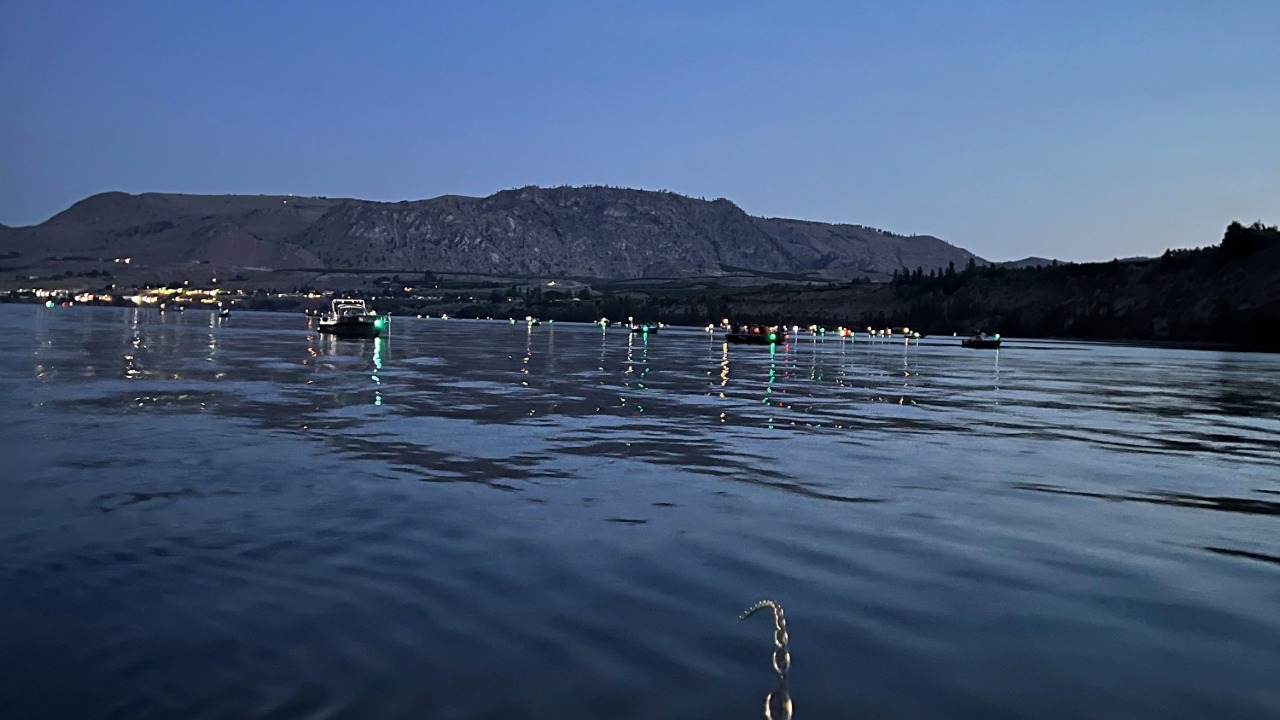
The next week could determine whether Washington's Columbia sockeye run is late or a bust as Bonneville Dam counts drive decisions on Brewster and Upper Columbia fisheries. (Photo: WDFW)
BREWSTER, Wash. — The next several days will determine whether Washington’s premier Upper Columbia sockeye fishery opens this summer.
State fishery managers delayed the planned July 1 opening at Brewster Pool and reduced or canceled Columbia River sockeye fisheries after early returns tracked well below the preseason forecast of 275,000 fish.
| Date | Sockeye |
|---|---|
| June 18 | 2,101 |
| June 19 | 3,036 |
| June 20 | 3,984 |
| June 21 | 4,553 |
| June 22 | 4,841 |
| June 23 | 5,171 |
| June 24 | 4,062 |
| YTD Cumulative | 36,680 |
Sockeye returns are tracking well-below what fishery managers forecasted before the season, which means fewer fish are available to support fisheries throughout the Columbia River system.
— Quinten Daugherty, Acting Columbia River Fisheries Manager, WDFW
But WDFW also cautioned that significant uncertainty remains, with greater confidence expected around June 27. That’s the date when, on average, half of the Columbia sockeye run has historically passed Bonneville Dam.
These closures and reductions reflect a precautionary, in-season adjustment designed to align fisheries with current return data while preserving flexibility if conditions change as the run develops.
— Quinten Daugherty, Acting Columbia River Fisheries Manager, WDFW
Whether this year’s run is simply late or substantially smaller could become much clearer over the next week.
Why June 27 Matters
The June 27 benchmark is based on historical averages, not a biological deadline.
If daily passage begins accelerating over the next several days, the in-season run estimate could increase substantially. If counts remain relatively flat into early July, confidence will grow that the preseason forecast significantly overestimated this year’s return.
As of this week, cumulative passage at Bonneville Dam stood at approximately 36,700 sockeye.
Even if daily counts average roughly 5,000 fish through June 27, cumulative passage would reach only about 46,000 to 48,000 fish. While this date is just an indicator for fisheries managers to use as a marker, this time next week if there has been no dramatic increase in numbers, it should not come as a surprise if the Brewster fishery does not open in 2026.
For comparison, strong Columbia sockeye runs often produce peak days exceeding 15,000 to 20,000 fish, while exceptional years have recorded daily counts well above that level.
Weather May Become Part of the Story
One important variable is the weather.
After an unusually hot week across much of the Columbia Basin, forecasts call for a dramatic cooling trend beginning Thursday night. High temperatures are expected to drop into the 60s and 70s across much of eastern Washington, with rain showers, increased cloud cover and gusty southwest winds forecast through the weekend.
Scientists know sockeye are highly sensitive to warm water. As river temperatures approach roughly 68 to 70 degrees, fish often slow their upstream migration or seek out cooler water near tributary mouths and deeper sections of the river until conditions improve.
The cooler weather pattern could moderate river temperatures and strengthen those cold-water refuges. However, whether those changing conditions are enough to alter this year’s migration timing remains unknown.
The next several days of fish counts should begin answering that question, so if there are actually sockeye holding below Bonneville the cooler water should bring them over. Conversely, great weather can’t entice fish that aren’t there waiting for cooler water.
Brewster Provides an Important Historical Benchmark
Last year’s management decisions offer valuable context.
During the 2025 season, Columbia sockeye managers dramatically reduced the in-season run estimate from about 350,000 fish to approximately 183,200 before lowering it again to roughly 172,400 fish.
Even with that major downgrade, Brewster Pool remained open under significant restrictions. Managers reduced the season to four days per week and cut the daily limit from four sockeye to two.
The current management decision is noticeably different.
Rather than opening Brewster under reduced regulations, WDFW canceled the July 1 opener before it began while waiting for additional passage data.
Although WDFW has not identified a specific run size that automatically triggers a Brewster opening, previous management frameworks have allowed a non-treaty recreational harvest for Columbia sockeye runs between 150,000 and 200,000 fish, with harvest quotas adjusted as in-season estimates change.
That makes the next week especially important.
If Bonneville Dam counts begin climbing sharply, managers could revisit Upper Columbia opportunities. If they do not, additional closures could remain in place throughout the summer.
The Bottom Line
The next seven days may determine whether 2026 becomes a disappointing Columbia sockeye season, or simply a late one.
If Bonneville Dam begins recording sustained daily passages in the 10,000- to 20,000-fish range, anglers could see renewed optimism and potential reopening discussions.
If counts remain near current levels into early July, it would strengthen the case that this year’s run is substantially smaller than preseason forecasts suggested.
For now, every day’s passage count at Bonneville carries added significance, not only for Brewster guides and Upper Columbia anglers, but for salmon fishermen across Washington.
Frequently Asked Questions
About the Author


1 thought on “Next Week Critical for Columbia Sockeye and Brewster Season”