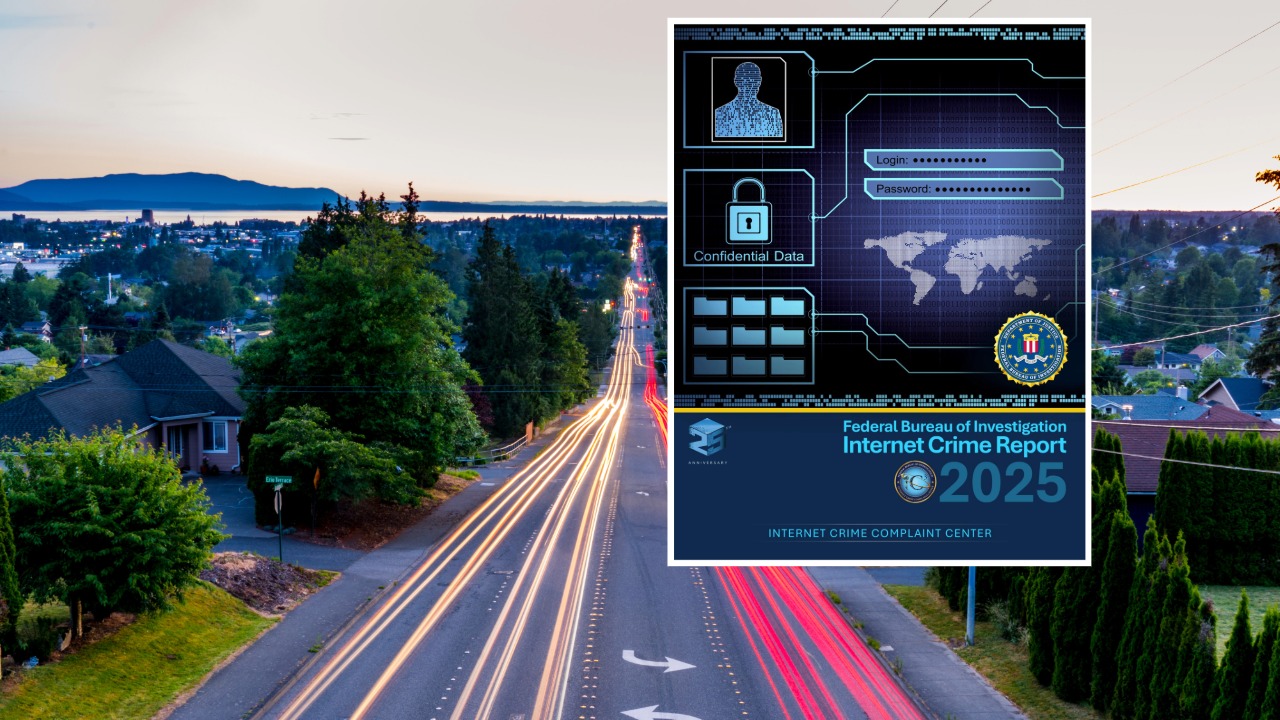
Whatcom County warns permit applicants about AI-powered email scams. FBI reports Americans lost nearly $21 billion to cybercrime in 2025, up 26% from the prior year.
BELLINGHAM, Wash. — Whatcom County officials are warning residents about a surge in sophisticated email scams targeting permit applicants, as new federal data shows cybercrime losses across the U.S. have reached record levels.
“We are getting reports of scammers sending fake invoices with Whatcom County logos,” county officials reported Wednesday, April 22.
The Whatcom County Planning and Development Services Department said that scammers send fake invoices that appear to come from county government, sometimes using official logos and real permit data.
“These scams are very sophisticated,” county officials said. “Some are using artificial intelligence to pull permit data and impersonate county staff.”
Fake Invoices Mimic County Communications
The fraudulent emails often direct recipients to click links or submit payments.
“We are taking cybersecurity steps on our end to try and foil these criminals,” county officials said.
Officials stress that residents should avoid interacting with suspicious messages and verify information through official channels instead.
Legitimate emails from county staff come from @co.whatcom.wa.us addresses. Automated permitting messages come from noreply@eplmail.tylerapp.com.
The county emphasized it will never request permit fee payments via wire transfer, a common tactic in fraud schemes. Residents should log directly into the county’s Customer Service Portal to check permit status and make payments rather than using links in emails.
It has never been more important to be diligent with your cybersecurity, social media footprint, and electronic interactions.
— Jose A. Perez, Operations Director for Criminal and Cyber Branch, FBI
FBI Report Shows Sharp Rise in AI and Crypto Scams
The warning comes as the FBI’s Internet Crime Complaint Center report on April 6 revealing a dramatic increase in cyber-enabled fraud nationwide. According to the FBI’s 2025 Internet Crime Report, Americans lost nearly $21 billion to cybercrime, which is a dramatic 26% increase from the previous year.
“It has never been more important to be diligent with your cybersecurity, social media footprint, and electronic interactions.”Jose A. Perez, FBI Operations Director for Criminal and Cyber Branch, said.
The IC3 received more than 1 million complaints in 2025, averaging nearly 3,000 per day.
Investment scams, business email compromise, and tech support fraud accounted for the largest financial losses. Cryptocurrency-related fraud alone totaled more than $11.3 billion, making it the costliest single category.
For the first time ever the report tracked crimes involving artificial intelligence, which generated 22,364 complaints and nearly $893 million in losses. Scammers increasingly use AI tools to create convincing fake identities, voice clones, and official-looking communications.
Older Americans Hit Hardest
Adults age 60 and older reported the highest losses, totaling approximately $7.7 billion in 2025, according to the FBI. The 50-59 age group lost another $3.7 billion.
Officials say these figures likely underestimate the true scale of fraud, as many incidents go unreported.
How to Protect Yourself
Authorities recommend several steps to avoid becoming a victim.
- Do not click links or download attachments from unsolicited emails.
- Verify requests by contacting agencies directly through official websites.
- Authorities say to avoid sending payments via wire transfer or cryptocurrency unless verified through proper channels.
- Monitor accounts closely and report suspicious activity immediately.
The FBI urges the public to take a moment before responding to urgent or high-pressure requests, a hallmark tactic of scammers.
Reporting Suspected Fraud
Anyone who believes they have been targeted should report the incident as soon as possible. File complaints with the FBI’s Internet Crime Complaint Center at ic3.gov or through local law enforcement.
Officials recommend documenting all relevant details, including contact methods, payment information, and timelines, to assist investigators.
About the Author