

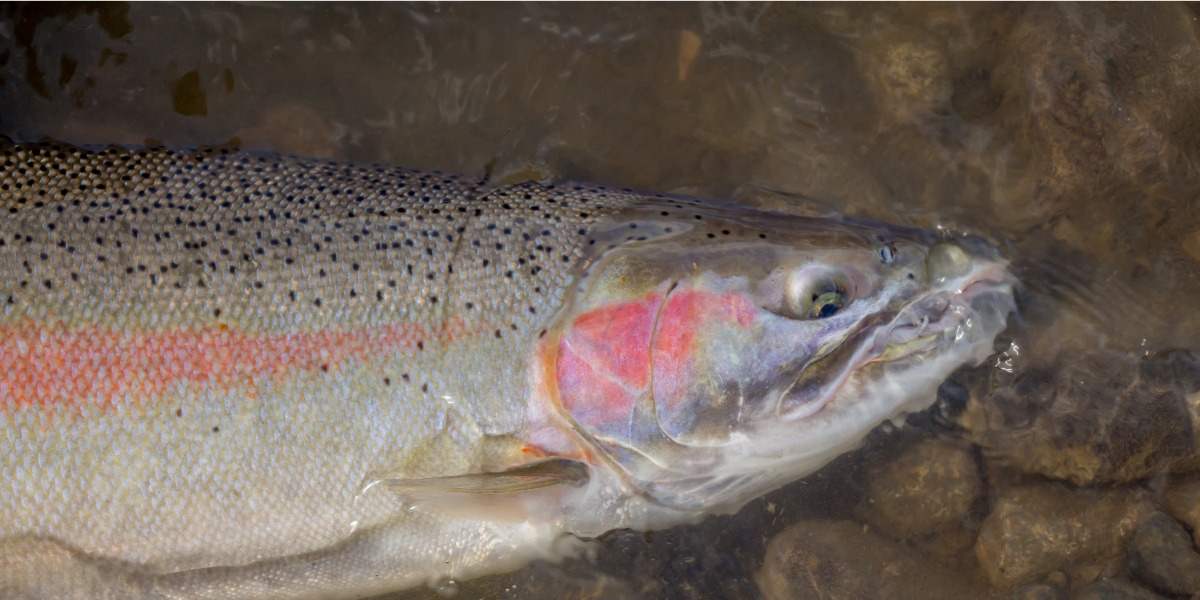
OLYMPIA, Wash. — It is February 2026, and Washington’s iconic Skagit River is not filled with guide boats or the economic activity many flood-ravaged communities depend on each winter. The world-famous steelhead season remains closed, not because forecasts failed, escapement goals were missed, or new biological concerns surfaced.
The season closed because the state chose not to fund the one program required to legally open it.
That distinction matters. It raises serious questions about how fisheries policy is now being made in Washington.
Olympia did not close the Skagit River steelhead season through the public, science-driven season-setting process anglers are told governs fisheries management. Lawmakers used the budget instead.
The Legislature declined to fund the Puget Sound salmon and steelhead monitoring program required to legally open a Skagit and Sauk steelhead fishery under federal permits. Without that funding, managers could not propose, debate, or approve a season, regardless of forecasted returns.
State officials described the closure as unavoidable. A review of the budget shows it was anything but accidental.
The requirement that determines whether a season exists
Washington’s current management framework requires funded monitoring to meet Endangered Species Act conditions for Puget Sound steelhead fisheries. That monitoring includes in-season run assessments, creel surveys, and enforcement.
Without those components, the state cannot authorize a recreational fishery, even one limited to catch-and-release.
Lawmakers, managers, and stakeholders have understood that dependency for years.
By declining to fund the monitoring program for the 2025–27 biennium, the Legislature removed the single prerequisite needed to even consider a Skagit steelhead season.
The state did not reject a proposal.
No proposal ever reached the table.
What the budget funded and what it did not
The monitoring program did not disappear as part of an across-the-board reduction at the Washington Department of Fish and Wildlife.
During the same biennium, lawmakers funded other agency priorities, including administrative functions, capital projects, and non-harvest programs.
The Puget Sound steelhead monitoring program stood apart as one of the few left unfunded.
That choice did not directly reduce fishing pressure or conserve fish. It eliminated the legal pathway for a season to exist.
Budget decisions are policy decisions. In this case, the policy outcome guaranteed the closure of a highly debated fishery without a public vote.
Avoiding the season-setting process altogether
Washington’s North of Falcon process exists to weigh biological data, stakeholder input, and co-management obligations before finalizing seasons.
Defunding monitoring ahead of that process ensured the Skagit steelhead season would never reach it.
The Fish and Wildlife Commission did not vote against anglers.
The public never saw a formal rejection of the fishery.
No biological threshold was cited as the cause of closure.
Budget timing bypassed the process upstream.
Science without data, and data without funding
Officials cited uncertainty and risk when explaining why the season did not open. At the same time, lawmakers removed funding for the very data collection used to reduce uncertainty and manage risk.
That logic raises concerns from a scientific perspective.
When uncertainty drives management decisions, disabling monitoring does not resolve it. The action guarantees uncertainty instead.
Science-based management relies on collecting data proportional to risk. Defunding data collection while pointing to data gaps does not represent neutral management. It produces a predetermined outcome.
Hatchery decisions compound the impact
Reductions at facilities such as Skamania Hatchery further narrow future management options.
Hatchery production affects more than recreational fishing. It influences treaty-reserved tribal fisheries, run forecasts, and harvest planning across the system. Hatcheries function as policy tools rather than treaty guarantees, but production changes still reshape the management landscape.
Combined with the elimination of monitoring, those reductions signal a broader shift away from maintaining harvest opportunity. Officials have not made that policy shift explicit in public.
That raises ethical questions over how this affects tribal traditions on the Columbia River as a result of reduced numbers.
Ethics versus legality
None of this requires allegations of illegality to raise concern.
Using budget omission to achieve an outcome that could not pass through open policy debate may remain lawful. It still raises ethical questions.
Ethical fisheries management depends on transparency, accountability, and honest framing of tradeoffs. Quietly disabling a season by removing its legal prerequisites fails that test.
What the record supports
The record shows the Skagit steelhead season did not close due to biology alone. Lawmakers closed it by choosing not to fund the program required to allow it.
That decision delivered a contested outcome without requiring officials to publicly defend it at a time when Olympia claims budget woes but continues to increase taxes and spending at record rates in 2025 and 2026.
Key takeaways
• The Skagit steelhead season did not fail in the season-setting process. Budget decisions prevented it from being proposed.
• Lawmakers understood the consequences of removing monitoring funds and moved forward anyway.
• Other agency priorities received funding, pointing to a selective policy choice rather than unavoidable austerity.
• Defunding data collection while citing uncertainty conflicts with the principles of science-based management.
• The approach avoided public accountability while producing a highly debated result.
WDFW was contacted for this story and did not respond to PNW Daily.
About the Author





2 thoughts on “How Olympia Quietly Ended the Skagit Steelhead Season”