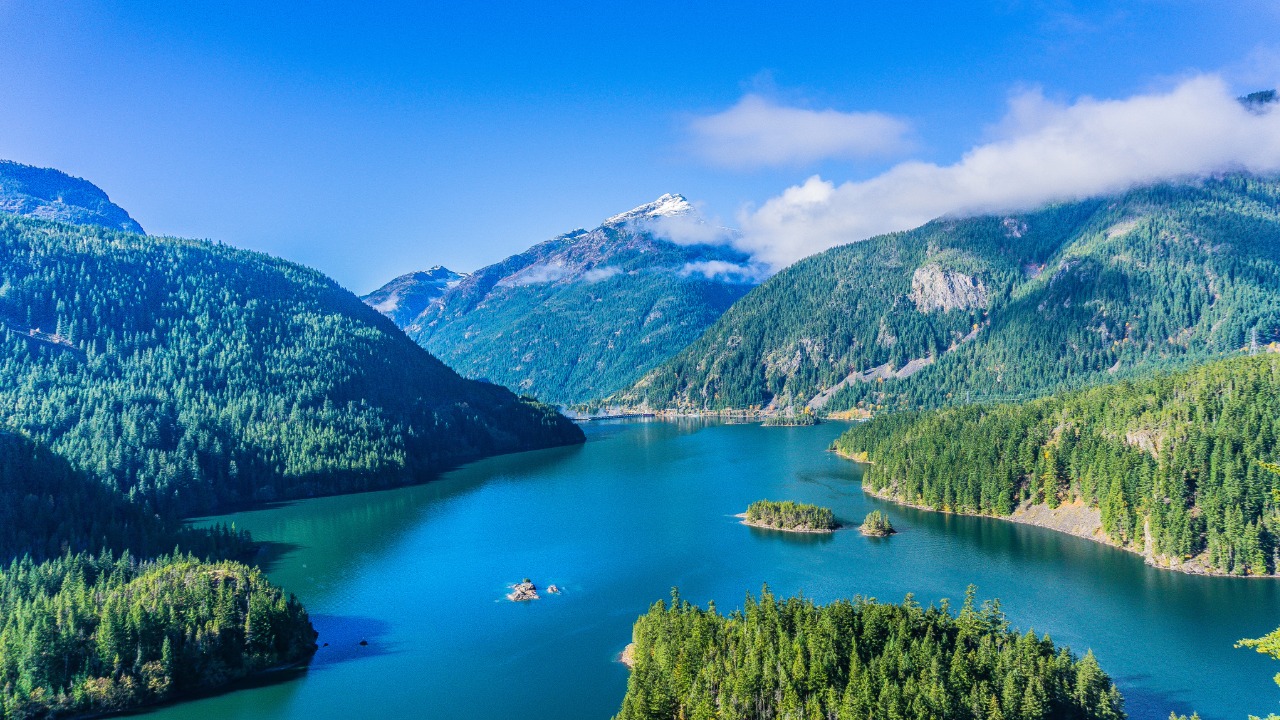
Diablo Lake, the reservoir formed by Seattle City Light's Diablo Dam, is one of three mainstem Skagit River dams the settlement requires the utility to outfit with fish passage.
MOUNT VERNON, Wash. — Federal regulators are now deciding whether to approve a settlement that could reshape the Skagit River for the next 50 years, and Skagit Valley farmers want part of it rejected.
Seattle City Light formally announced its settlement agreement for the Skagit River Hydroelectric Project relicensing in March. The announcement followed nearly eight years of negotiation with Skagit treaty tribes and federal, state and local agencies.
Two months later, the public comment period on that settlement has exposed a fault line between two causes that have coexisted in the Skagit Valley for more than a century: salmon recovery and farmland preservation.
A Settlement Years in the Making
City Light filed its Offer of Settlement Agreement with FERC on May 20, 2026. More than a dozen parties signed on, including the National Marine Fisheries Service, the National Park Service, U.S. Fish and Wildlife Service, U.S. Forest Service, Bureau of Indian Affairs, Washington Department of Ecology, Washington Department of Fish and Wildlife, Skagit County, the Sauk-Suiattle Indian Tribe, the Swinomish Indian Tribal Community, the Upper Skagit Indian Tribe, Trout Unlimited, American Whitewater, North Cascades Institute and the Skagit Fisheries Enhancement Group.
FERC published notice of the settlement on June 5. That opened a formal comment period, which closed July 2. Reply comments are due by 5 p.m. Eastern on July 17, so the record remains open.
The comment period has shifted this debate from closed negotiations among the settlement parties to the broader public. Farmers, anglers, conservationists and Skagit Valley residents can now weigh in before FERC decides whether to approve the proposed 50-year license. Unlike the private talks that produced the settlement, this stage is open to anyone with a stake in the outcome.
A Different Kind of Dam Problem
The Skagit Basin has five major hydroelectric dams. Puget Sound Energy’s Upper and Lower Baker dams already move fish around their structures through a trap-and-haul system that has run for decades. Crews trap adult sockeye, coho and other salmon below the dams and truck them upstream, then collect juveniles and haul them back downstream. That system has helped rebuild the Baker sockeye run from near extinction into one of Puget Sound’s major sockeye fisheries.
Seattle City Light’s three dams on the mainstem Skagit tell a different story. Ross, Diablo and Gorge dams have no upstream or downstream fish passage of any kind. They completely block anadromous fish from the upper mainstem Skagit.
Fixing that is the centerpiece of the new settlement. City Light has agreed to build fish passage over time, at an estimated cost near $979 million, instead of relying solely on downstream mitigation to offset the dams’ impact.
Where the Estuary Comes In
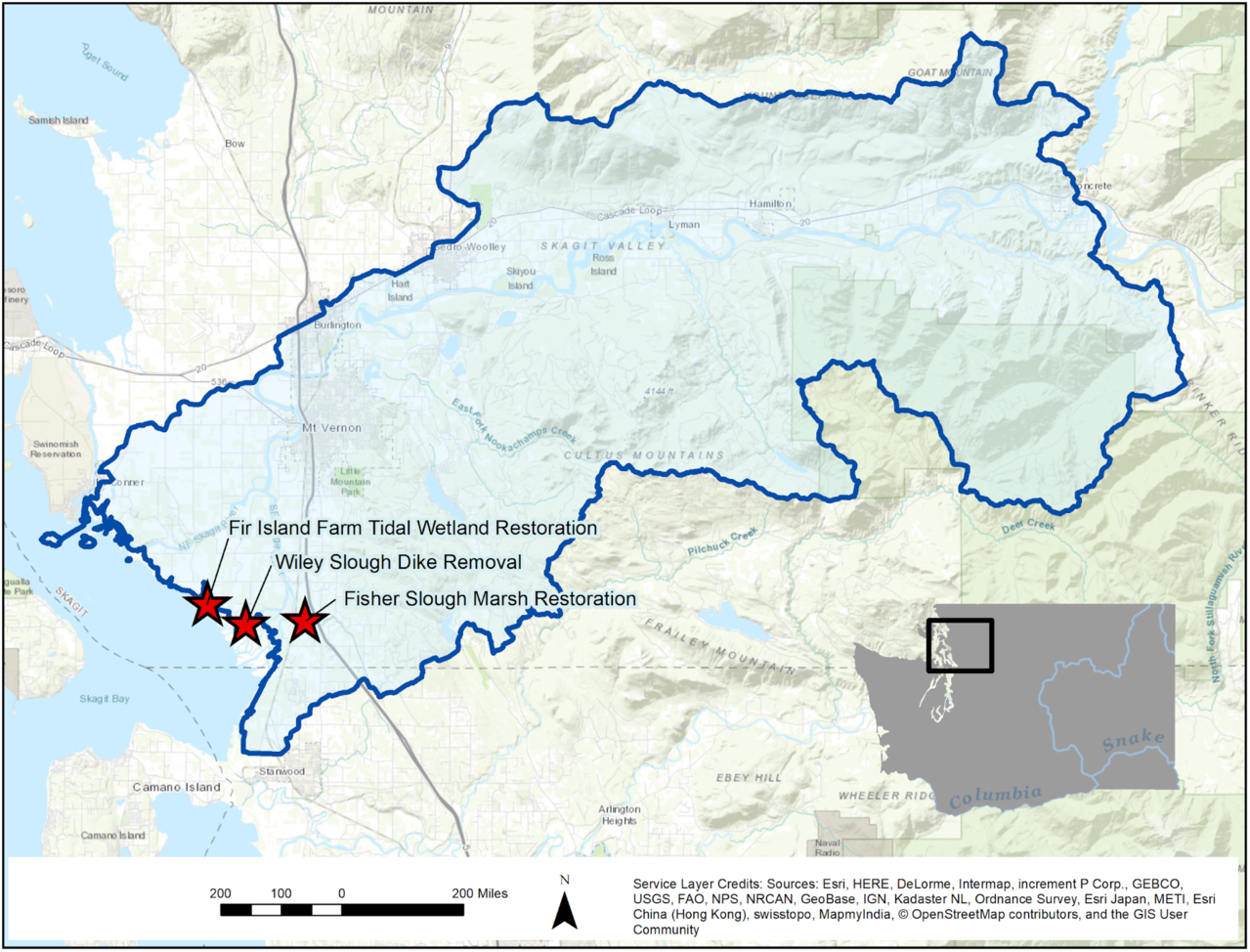
Fish passage anchors the deal, but it isn’t the only piece. The settlement also directs more than $75 million toward estuary restoration projects roughly 85 miles downstream of the dams, in the Skagit River delta near Fir Island. Two settlement provisions, known as FA LA-03 and FA LA-04, are driving the current dispute.
Skagitonians to Preserve Farmland and Save Family Farming, two Washington agricultural advocacy groups, filed comments this week asking FERC to reject that portion of the settlement. Their objection centers on roughly 1,300 acres of Skagit Valley farmland the groups say could ultimately be converted to estuary habitat.
Their filing argues the proposal conflicts with Skagit County’s Comprehensive Plan, its Agricultural-Natural Resource zoning, the county’s Farmland Legacy Program, and Washington’s Growth Management Act, which treats farmland as a finite resource requiring long-term protection. The groups also note that Skagit County code generally bars off-site compensatory mitigation on Agricultural-Natural Resource lands, since farming depends on interconnected drainage systems, irrigation infrastructure and crop rotation that can’t simply relocate.
Farm Groups Push Back
Jenna Freibel, Executive Director of the Skagit County Drainage and Irrigation Districts Consortium, laid out the farming community’s position last week on the Save Family Farming-affiliated Farming Show podcast, hosted by Dillon Honcoop.
Freibel said her organization does not oppose the settlement as a whole, and that it strongly supports the fish passage provisions the tribes fought hard to secure. “We’re not opposed to the entire settlement,” she said. Her objection is narrower, centered on the estuary funding.
Freibel said her organization asked repeatedly during negotiations to tie the estuary funding to the existing Skagit Chinook Recovery Plan, a science-based document the same resource agencies and tribes first published in 2005 and have overseen since. That request would have aligned farmland conversion decisions with the recovery plan’s priorities rather than a separately negotiated settlement provision. Negotiators did not adopt the change.
“I was disappointed that the signatories didn’t make that minor change. It would’ve alleviated much of our concern.”
Jenna Freibel, Executive Director, Skagit County Drainage and Irrigation Districts Consortium
Freibel said the agencies that wrote the 2005 recovery plan, including WDFW, NMFS and several of the signing tribes, are the same parties who adopted it as their guiding framework, which is part of why she found it surprising that the settlement’s estuary funding was not linked to it directly. She said the farming community remains committed to habitat recovery, but wants any farmland conversion to reflect the recovery plan’s strategic priorities rather than opportunistic negotiation.
Why the Estuary Matters to Fish
The science behind estuary restoration isn’t new, and few dispute it on its own terms. A 2005 supplement to the Skagit Chinook Recovery Plan, prepared by the Skagit River System Cooperative and NOAA Fisheries researchers, documented steep habitat loss.
The Skagit tidal delta has lost close to 75 percent of its historic estuarine footprint to diking, dredging and filling since the 1860s. Juvenile Chinook salmon depend on blind tidal channel habitat for rearing, and that habitat has shrunk even further.
The research found that at current outmigration levels, tidal delta habitat already limits how many juvenile Chinook can rear there, pushing more fish into life-history strategies with far lower survival odds. Restoring tidal delta and pocket estuary habitat, the study concluded, would meaningfully increase the river’s capacity to produce adult Chinook.
That science helped drive NMFS, WDFW and the tribes to push for estuary investment in the settlement. Freibel and the farm groups point to the same science for a different reason: they believe it shows exactly why negotiators should have tied the funding to the recovery plan, rather than treating it as a separate settlement line item.
Agencies and Tribes Back the Deal
WDFW has backed the settlement firmly since the March announcement.
“After nearly eight years of discussion with Seattle City Light, Skagit treaty tribes, and other federal, state, and local agencies, this relicensing agreement is good news for fish passage, habitat restoration, and people from the Skagit Valley to the City of Seattle,” said WDFW Director Kelly Susewind.
“We look forward to continued collaboration with Seattle City Light, our tribal co-managers, and local partners to support implementation of this agreement, including significant investments in bringing salmon back to the upper Skagit watershed and restoring habitat for fish and wildlife,” added WDFW Regional Director Brendan Brokes.
The Swinomish Indian Tribal Community released a similarly direct statement in March.
“As People of the Salmon, restoring and maintaining the health of the Skagit River will always be our highest priority. This is a hard-won, fair, and forward-looking agreement that honors our Treaty rights, strengthens the ecology of the river, and provides a responsible path forward for hydropower generation and salmon recovery.”
Chairman Steve Edwards, Swinomish Indian Tribal Community
How to Weigh In
FERC’s eComment system lets anyone submit brief comments, up to 10,000 characters, without prior registration. Commenters who want to file more formal, registered comments can use FERC’s eFiling system instead. All filings must reference the project name and docket number on the first page: Skagit River Hydroelectric Project, P-553-244.
Reply comments addressing filings already submitted, including the farm groups’ objection, are due by 5 p.m. Eastern on July 17.
What Happens Next
FERC will weigh both sets of comments, along with anything else filed during the reply period, before deciding whether to approve the settlement and issue City Light’s new 50-year license. That decision will determine more than the fate of fish passage at Ross, Diablo and Gorge dams. It will shape how the balance between salmon recovery and Skagit Valley agriculture holds for the next half-century.
The Skagit River has always sustained two communities: salmon and farmers. The challenge before federal regulators is finding a path that strengthens both, rather than forcing one to bear the cost of saving the other.
Frequently Asked Questions
About the Author