

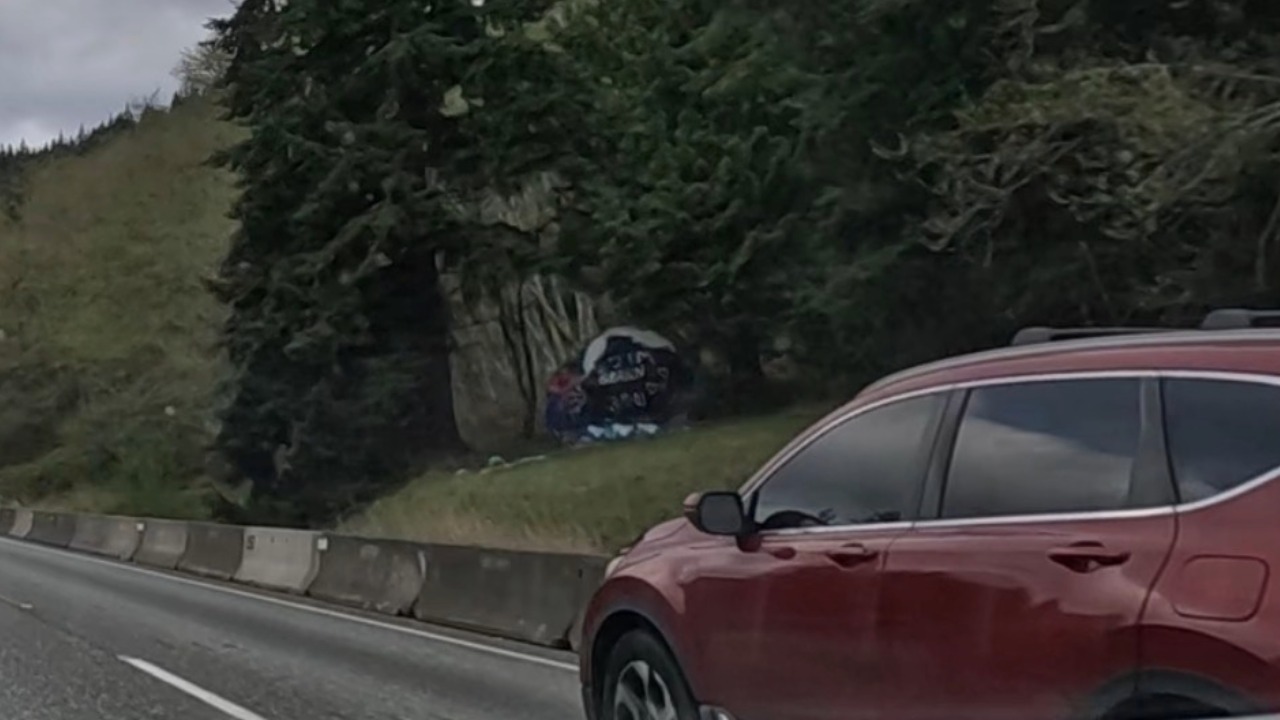
The iconic I-5 graffiti rock is gone. WSDOT blasted the 100-ton Bellingham landmark into over 100 pieces. Many thought it would be moved intact. (Photo: PNW Daily dashcam)
BELLINGHAM, Wash. — For days, tarps surrounded The Rock along Interstate 5 south of Bellingham while Washington State Patrol troopers guarded the site. Rumors spread online as residents wondered what remained underneath. Now, the answer is clear.
The longtime Bellingham landmark known simply as The Rock no longer exists in its original form. Crews destroyed the landmark during work tied to the Washington State Department of Transportation’s fish passage project near Chuckanut Creek.
Community Page Confirms Destruction
The confirmation came Wednesday from the Bellingham Rock Facebook page dedicated to preserving the history of the landmark, otherwise known as “the I-5 Graffiti Rock.”
Local historian and community archivist Keith Cook manages the page. For years, documenting the massive 100-ton boulder that sat beside Interstate 5 north of the Lake Samish exit.
The page became a digital archive for thousands of photos and memories. Residents shared images of marriage proposals, graduation messages, memorials, sports celebrations and political statements painted across the rock over the decades. In recent weeks, it also became one of the main public sources tracking the rock’s controversial removal.
“This is a sad day in Bellingham,” the page posted Wednesday. “The Rock, as we knew it, is effectively gone.”
According to the post, many residents believed WSDOT would relocate the landmark intact. Instead, crews dismantled it during the removal process. “Instead of being preserved and moved, The Rock has been blasted apart into over 100 pieces,” the page stated. “For many, this feels like a devastating bait and switch.”
Instead of being preserved and moved, The Rock has been blasted apart into over 100 pieces. For many, this feels like a devastating bait and switch.
— Bellingham Rock Facebook page
Why WSDOT Removed the Rock
The destruction follows months of controversy surrounding WSDOT’s Interstate 5 fish passage work near Lake, Friday and Chuckanut creeks. In April, WSDOT announced plans to relocate the rock because it sat directly inside the construction footprint for new salmon habitat restoration infrastructure.
The agency also said federal highway safety regulations prevented crews from returning it to the Interstate 5 corridor after removal.
Notably, WSDOT did confirm in its April announcement that crews would not move the landmark intact.
“Once the paint is removed, crews will break the rock into smaller pieces,” the agency stated. The agency cited the rock’s weight of more than 100 tons as the reason, noting that moving it intact would require significant cost, specialized equipment and additional permits.
WSDOT had signed an agreement with a private Bellingham property owner who tentatively agreed to accept pieces of the rock and allow public access. However, whether those pieces will be delivered or distributed to the public remains unclear.
Contamination Concerns at the Site
Part of the removal process also involved environmental cleanup tied to decades of accumulated paint contamination around the site. Records from the Washington State Department of Ecology show the property entered the state cleanup process under the Model Toxics Control Act because of confirmed contamination involving lead and other metals in soil and bedrock. State records reference a 2024 paint and soil sampling memo, a 2025 site hazard assessment report, and a 2025 environmental covenant removal notice.
WSDOT previously stated contractors planned to remove contaminated soil ranging from six inches to two feet deep around the site before dismantling the formation.
It Will Always Remain Part of Bellingham’s Heart
Despite the environmental concerns, public reaction Wednesday focused largely on the emotional loss of a landmark many residents considered uniquely Bellingham. For generations, The Rock served as an unofficial public message board and cultural touchstone along the freeway. “Seeing The Rock meant you were home,” the Facebook page wrote.
The page encouraged residents who want to see what remains to visit soon, describing the site as fractured remnants with most paint already stripped away. “While its physical presence has now been destroyed, its meaning does not disappear,” the page wrote. “It is official. The Rock, in its original form, is gone. But for many, it will always remain part of Bellingham’s heart.”
Frequently Asked Questions
About the Author


1 thought on “Bellingham Rock Is Gone After WSDOT Blasted It Into 100 Pieces”