

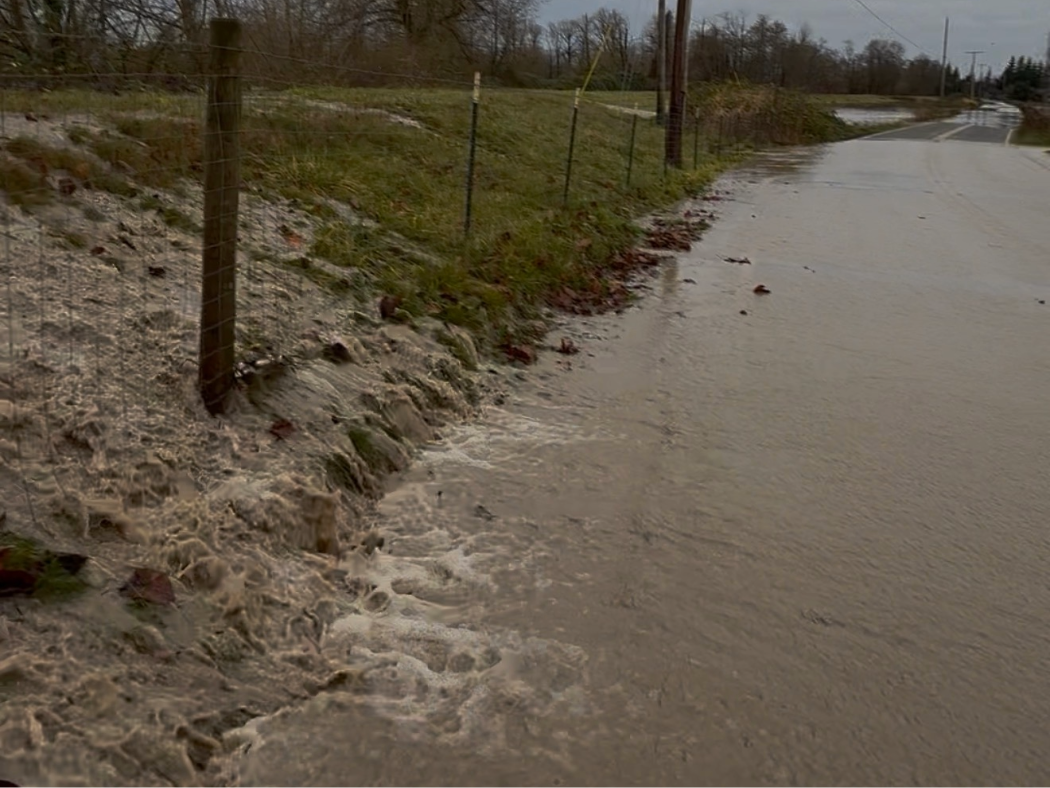
A levee along the Nooksack River reveals the river has breached its banks spilling into Lynden farmland. (PNW Daily staff)
BLAINE — Fisherfolk are tuned to the weather. If you ask any fisherfolk worth their salt about the weather, they’ll swear the atmospheric river storms that once arrived every few years now hit almost every winter.
Scientists say the perception is real. While the total number of atmospheric rivers has stayed steady with 10 to 20 per year on the West Coast, the strongest storms are wetter, wider and more damaging.
Instead of being a Hollywood punchline, Pineapple Express storms are now changing life in the Pacific Northwest in real time.
In the 1990s and early 2000s, major storms typically came every five to six years. Recent winters have seen powerful events almost annually, causing flooding, landslides and road closures across Washington, Oregon and British Columbia.
Warmer air holds more moisture, about 7 percent more for every 1 degree Celsius of warming. That extra water makes storms longer, wider and more intense. Some studies show atmospheric rivers have grown up to 25 percent in size, with AR4 and AR5 storms now more common in the northern West Coast.
Atmospheric rivers deliver 30 to 50 percent of annual precipitation in the Pacific Northwest and end most persistent droughts, according to the Northwest Climate Hub and NOAA. They also cause about 80 percent of flood damage along the West Coast, with losses averaging $1 billion a year.
Wildfires add risk. Burned hillsides cannot absorb heavy rain, raising the chance of mudslides. One study projects up to a sevenfold increase in extreme rain following wildfire by 2100.
Scientists say forecasting, early warnings and infrastructure upgrades are essential. Atmospheric rivers remain vital to water supplies, but stronger storms are changing how communities experience winter weather.
And changing access and seasons for salmon and steelhead anglers.
About the Author






3 thoughts on “Are Atmospheric Rivers Becoming More Frequent in the Pacific Northwest?”