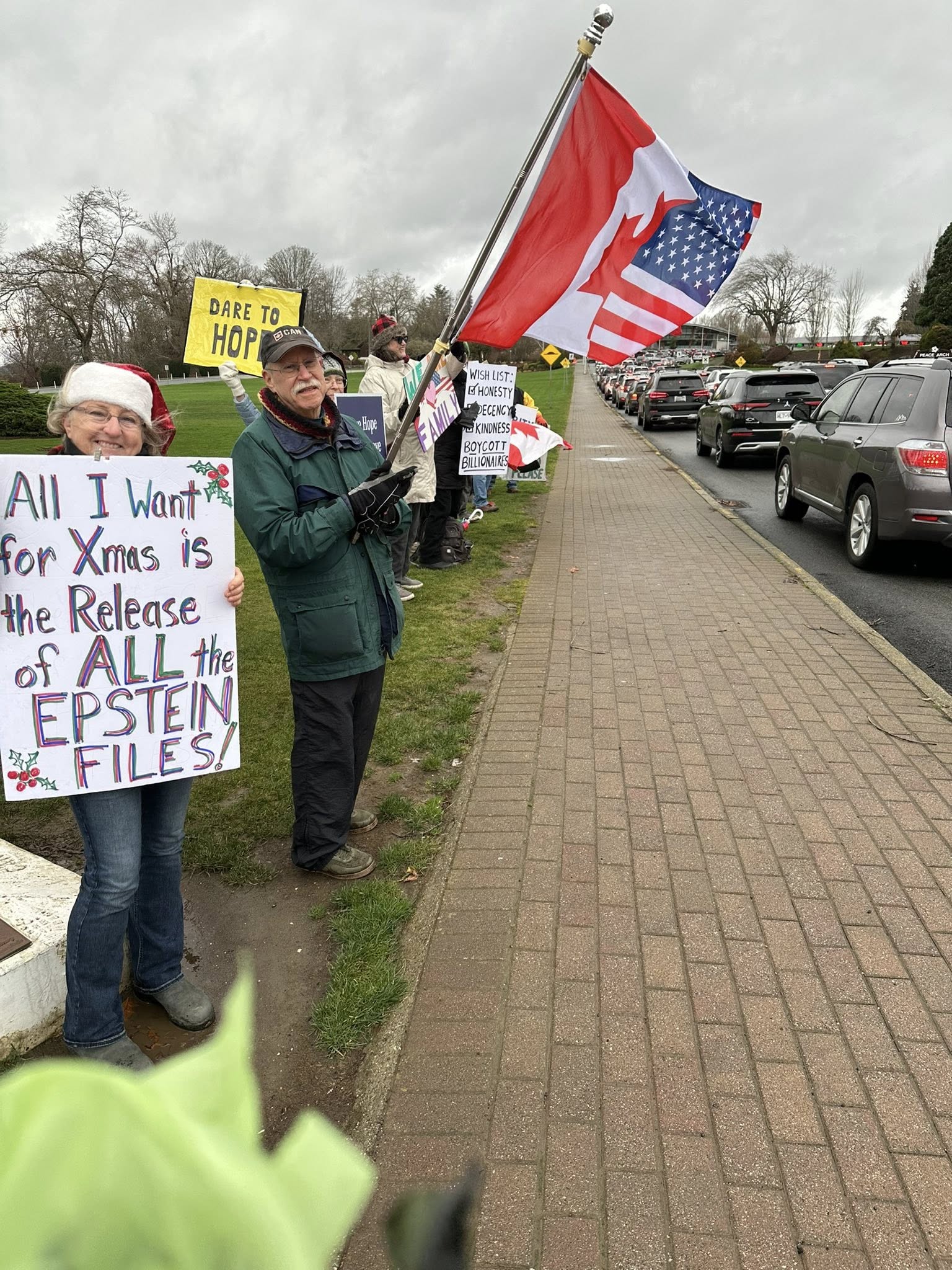
At the Peace Arch Border Crossing this past Saturday — the final weekend before Christmas — two very different border stories were unfolding at the same time.
On one side of the park, members of Peace, Love and a Handshake gathered once again, continuing a series of bi-weekly rallies that have been taking place since March. Canadians and Americans met at the line, talking, waving, and sharing brief moments of connection in one of the few places where the border is visible but symbolic.
Just feet away, the contrast could not have been sharper.
Traffic heading north into Canada was heavy and backed up — typical of a pre-holiday weekend as travelers returned home or headed north to spend Christmas with family. Lanes were full, waits were long, and vehicles stretched far back toward Blaine.
Meanwhile, traffic heading south into the United States was virtually nonexistent.
No backups. No delays. Empty lanes.
Standing there, it was hard to ignore how striking the imbalance was. At one of the busiest travel weekends of the year, the flow was almost entirely one-way. The rally was about unity and shared space, but the border itself told a different story — one shaped by policy, enforcement, and who feels compelled, or welcome, to cross.
From a Pacific Northwest perspective, it was a reminder that borders are not just lines on a map. They are lived experiences — and sometimes the most revealing moments are the quiet ones, when nothing is moving at all.
About the Author