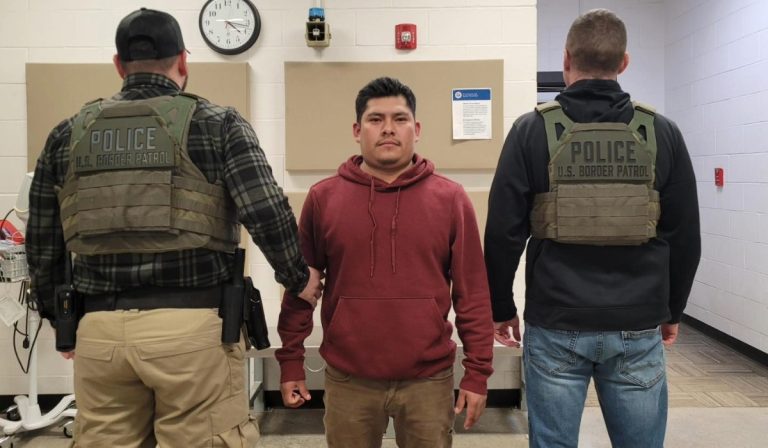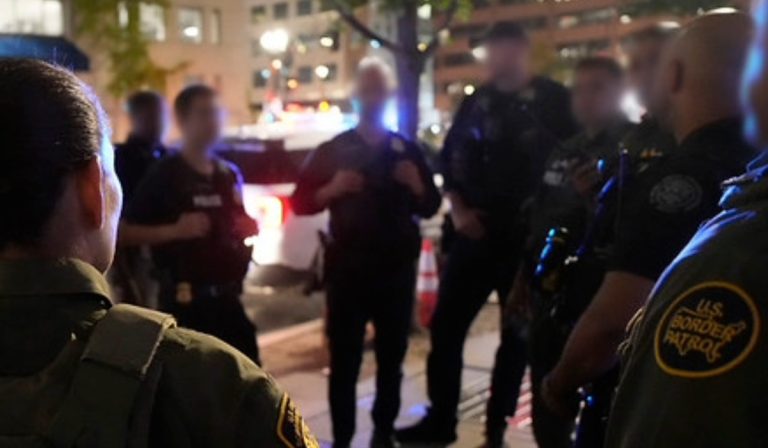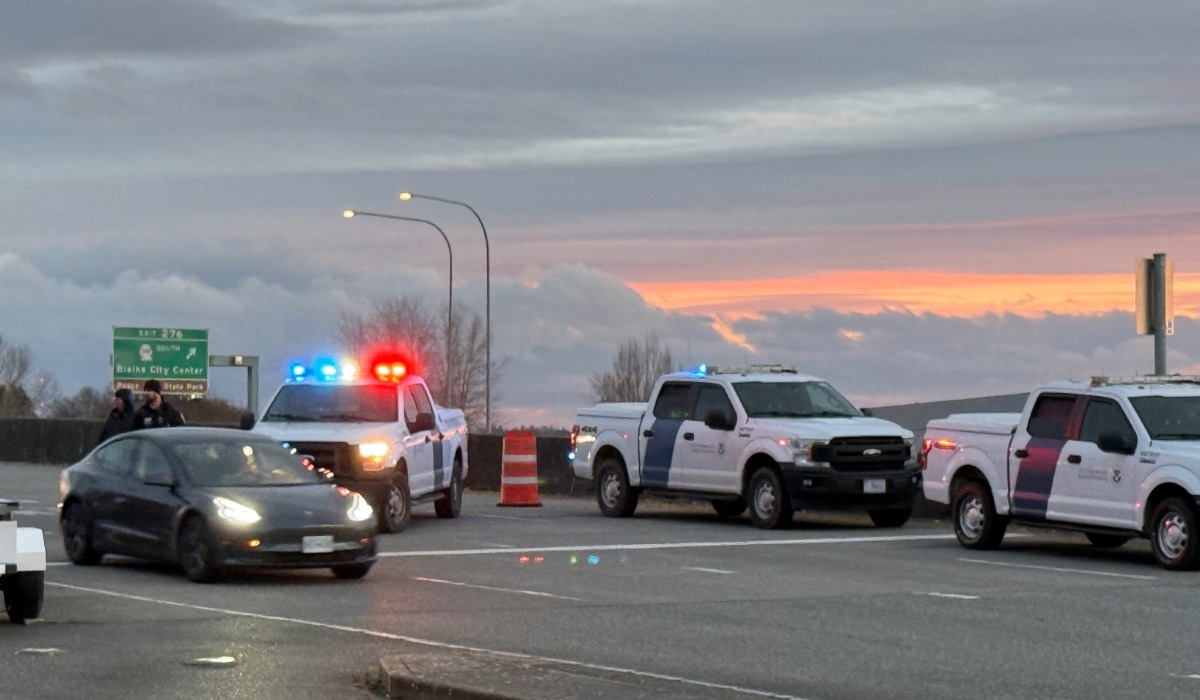
Drivers leaving the U.S. at several Washington border crossings are encountering exit checkpoints again as federal officials expand biometric tracking of travelers. (PNW Daily)
BLAINE, Wash. — Temporary exit checkpoints have begun appearing again at several U.S.–Canada border crossings in northwest Washington. Federal authorities are expanding a long-planned biometric data system designed to track when travelers enter and leave the United States.
Over the course of the past three weeks, the exit checkpoints that used to be deployed once or twice a year have once again become an almost daily presence as they did in May 2025.
On Saturday and Sunday, the checkpoints were deployed at multiple ports of entry simultaneously. PNW Daily livestreamed the events and viewer reactions were mixed.
“I’ve had this happen to me several times on both sides of the border,” Debbie Wise Denton said. “It was explained that they do it when they have reason to believe it’s necessary. I have no problem with it and appreciate them trying to keep us safe.”
The checkpoints typically use traffic cones and CBP vehicles. Officers with U.S. Customs and Border Protection often capture facial photographs, or ID and license plates of travelers leaving the country before they reach Canadian inspection booths.
“It’s a waste of our money,” Darryl Scheck commented. “Canada can handle entry into their own country. Stop pissing away our dollars on garbage and start putting it towards what people need.”
The renewed checkpoints also return as PNW Daily has observed survey crews working near several border facilities in Whatcom County. Crews have conducted measurements and engineering studies near exit checkpoint areas. While the evidence remains circumstantial, the activity suggests temporary setups could eventually give way to permanent infrastructure.
Federal policy dates back to 2017 order
The biometric entry-exit system expanding at land borders traces back to a directive issued during the first term of Donald Trump.
In early 2017, Trump signed an executive order directing the Department of Homeland Security to expedite the completion and implementation of a biometric entry-exit system. The order also required DHS to report progress to Congress.
In November 2020, DHS issued a Notice of Proposed Rulemaking. The proposal required all noncitizens to participate in facial biometric identity verification. It also made earlier biometric pilot programs permanent and expanded them to additional locations.
The policy push continued in 2025. On Jan. 20, Trump signed a new order titled Protecting the United States from Foreign Terrorists and Other National Security and Public Safety Threats. The order again directed federal agencies to strengthen screening and identity verification for foreign nationals entering or leaving the United States.
Together, the policies accelerated federal efforts to build a nationwide biometric tracking system. That effort now includes exit checkpoints appearing again at land crossings in northwest Washington.
New federal rule expanded biometric collection
Federal regulators took another step in late 2025 when the Department of Homeland Security finalized rules allowing facial biometric collection from most non-U.S. citizens entering or leaving the country.
The rule took effect Dec. 26. It authorizes biometric collection at air, land and sea ports of entry. The regulation also removes several long-standing exemptions, including those that previously applied to many Canadian travelers.
“With increased funding to support this critical mission, we will continue to expand facial biometrics and advanced technology for identity verification to further secure and innovate the entry/exit process at air, land, and sea,” Acting Executive Assistant Commissioner Diane J. Sabatino said in December.
Officials say the system improves identity verification. It also helps detect visa overstays, fraudulent travel documents and individuals previously removed from the United States.
Long-standing national security program
Federal officials have promoted biometric entry-exit tracking as a national security priority for more than two decades.
The National Commission on Terrorist Attacks Upon the United States identified biometric border tracking as a key tool for identifying individuals who overstay visas or attempt to reenter the country using false identities.
DHS now operates a facial recognition platform known as the Traveler Verification Service. The system compares live border photographs with passport images and other travel records.
Officials say the technology automates identity verification and reduces administrative work for officers.
Privacy concerns remain
Privacy advocates continue to question the expansion of biometric data collection and the length of time federal agencies retain the images.
According to DHS privacy disclosures, biometric records may remain stored for decades depending on how they connect to immigration or law-enforcement files.
Federal officials say the system focuses primarily on identity verification and immigration enforcement.
Continued rollout expected
With the federal rule now in effect and temporary exit checkpoints returning to the border, the biometric exit program appears to be entering a new phase of expansion.
PNW Daily will continue monitoring border infrastructure changes and federal policy developments affecting travelers crossing between Washington and British Columbia.
About the Author