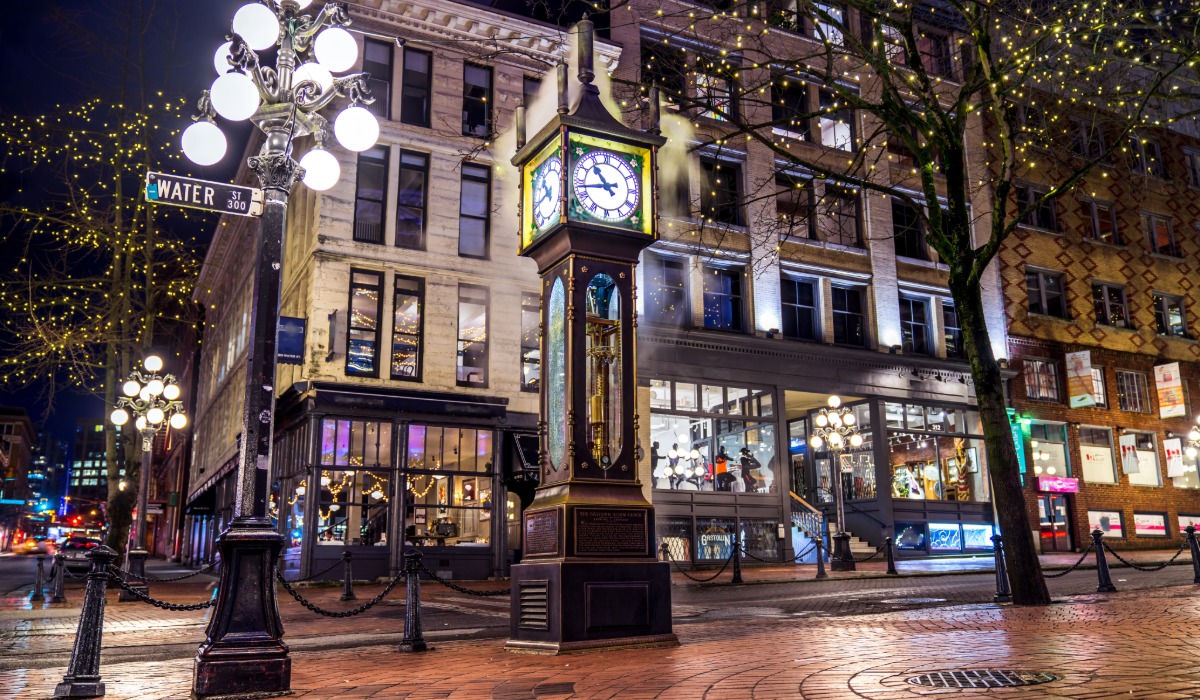
B.C. will stop changing clocks in 2026. Each winter, Washington would be one hour behind.
BLAINE, Wash. — British Columbia will end seasonal clock changes this year, committing to a single, year-round time system in a move that could renew debate over whether Washington should follow.
The B.C. government announced the province will adopt permanent daylight saving time after clocks “spring forward” on March 8, 2026. That will be the final clock change. When Nov. 1 arrives, clocks will not fall back, officially ending the twice-yearly shift.
“Every parent knows that changing clocks twice a year causes a significant amount of chaos on already busy lives,” Premier David Eby said. “British Columbians have been clear that seasonal time changes do not work for them.”
Provincial officials say the change aims to reduce disruptions for families and businesses while providing more evening daylight during winter months.
Eby said in he hopes neighboring U.S. states will eventually align.
“This decision isn’t just about clocks,” Eby said. “It’s about making life easier for families, reducing disruptions for businesses and supporting a stable, thriving economy. I am hopeful that our American neighbours will soon join us in ending disruptive time changes.”
What the change means along the border
For most of the year, B.C.’s new permanent time, UTC-7, will continue to match Washington, Oregon and California while those states remain on daylight saving time.
But each winter, Washington would be one hour behind B.C. unless U.S. law changes. That seasonal difference could affect cross-border commuters, broadcast schedules, transportation timetables and business hours in border communities like Blaine, Lynden and Point Roberts.
B.C. previously delayed implementing the shift after passing enabling legislation in 2019, citing the need to coordinate with U.S. West Coast states. Officials now say the province is moving forward regardless, pointing to strong public support and evolving cross-border conditions.
Washington’s recent push to end time changes
Washington lawmakers have debated ending seasonal clock changes for nearly a decade.
In 2019, the Legislature passed Substitute House Bill 1196, which would place Washington on permanent daylight saving time. Gov. Jay Inslee signed the measure, making Washington one of the first states to formally pursue year-round DST.
However, federal law does not currently allow states to adopt permanent daylight saving time on their own. Congress must first amend the Uniform Time Act before Washington can make the switch. As a result, the 2019 law remains on hold.
Since then, lawmakers have introduced additional bills attempting to resolve the issue.
Some proposals have continued pushing for permanent daylight saving time, contingent on federal approval. Others have proposed a different approach: moving Washington to permanent standard time instead. Unlike permanent DST, states may adopt year-round standard time without congressional action, similar to Arizona and Hawaii.
In the 2024 legislative session, Senate Bill 5795 proposed placing Washington on permanent Pacific Standard Time. Supporters argued it would immediately end clock changes without waiting on Congress. The bill did not advance.
For now, Washington continues to change clocks twice a year, even as neighboring states and provinces reconsider their approach.
Congress has considered proposals such as the Sunshine Protection Act, but none have yet been enacted, leaving states unable to make the switch independently.
“Changing our clocks twice a year is an absolutely antiquated and ridiculous tradition,” Washington Sen. Patty Murray said during her push to pass the Sunshine Protection Act.
How Arizona handles time
Arizona stays on Mountain Standard Time year-round. It does not “spring forward” in March or “fall back” in November. As a result:
- In winter, Arizona matches Colorado and other Mountain Time states.
- In summer, Arizona aligns with Pacific Daylight Time states like Washington and California.
The exemption dates back to 1968, shortly after Congress passed the Uniform Time Act. That law allows states to opt out of daylight saving time entirely and remain on permanent standard time. It does not allow states to adopt permanent daylight saving time without congressional approval.
That distinction is important for Washington.
Why this matters for Washington
Washington cannot legally switch to permanent daylight saving time unless Congress changes federal law. That is why the 2019 Washington law remains on hold.
However, Washington could adopt permanent standard time immediately, just like Arizona, because federal law allows that.
Hawaii also stays on permanent standard time year-round.
If B.C. moves to permanent daylight saving time in November 2026 and Washington continues changing clocks, the two jurisdictions would be one hour apart every winter.
If Washington followed Arizona’s model and adopted permanent standard time instead, Washington would be one hour behind B.C. year-round once B.C. locks into UTC-7.
The policy choice is not simply about ending clock changes. It is about which permanent offset Washington wants to live under.
Support and concerns
B.C. officials cited health research and public engagement showing strong support for eliminating seasonal time changes, with a 2019 consultation drawing more than 223,000 responses and about 93% favoring permanent DST.
Advocates say a consistent time system improves sleep patterns, simplifies scheduling and boosts evening economic activity.
Critics, however, often point to darker winter mornings, particularly for students and early-morning workers.
What Happens This Fall When B.C. Stops Changing Clocks
The biggest immediate impact will come in early November.
On Nov. 1, 2026, British Columbia will not fall back one hour. Washington, however, will still switch to standard time unless federal law changes before then.
That means for roughly four months each year, from November through March, communities along the border would be on different clocks.
For example:
- When it is 8 a.m. in Bellingham, it would be 9 a.m. in Vancouver.
- Evening commutes, broadcast schedules and cross-border business hours could all shift by one hour.
- Travelers crossing at ports of entry like Peace Arch and Pacific Highway would need to account for the time difference when planning trips.
The seasonal gap would disappear each spring when Washington moves clocks forward again, aligning with British Columbia from March through early November.
Unless Washington or Congress changes the law, that split would become the new normal for cross-border life in the Pacific Northwest.
About the Author