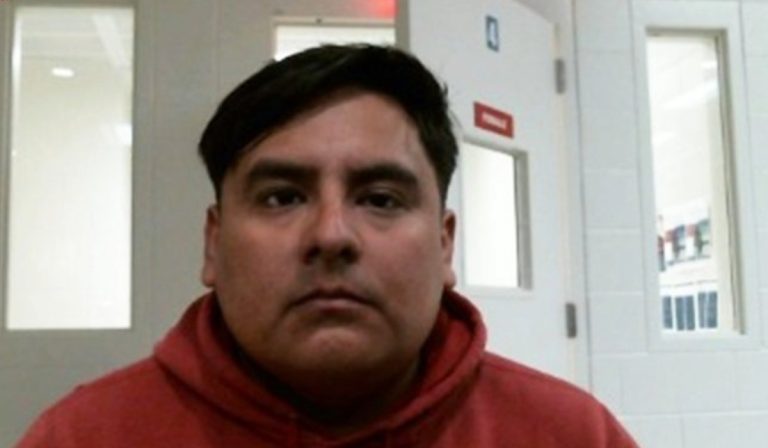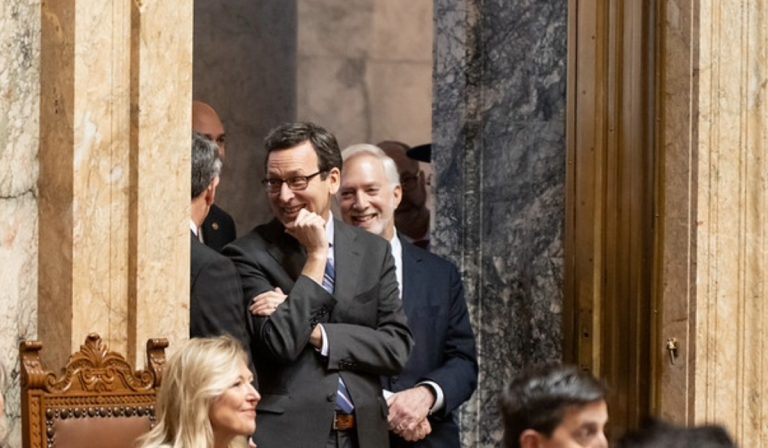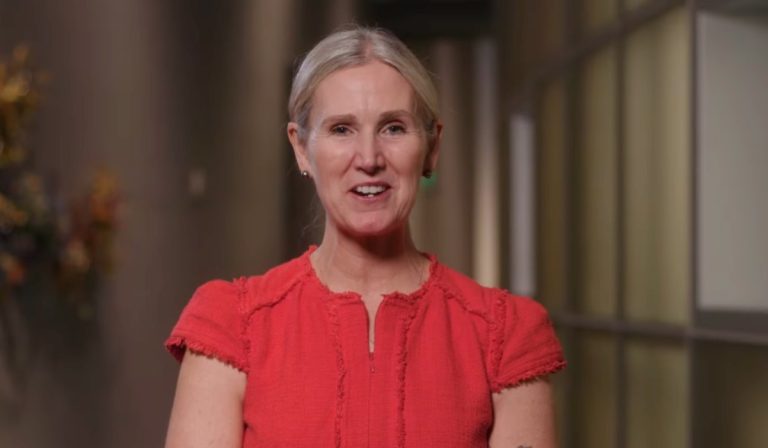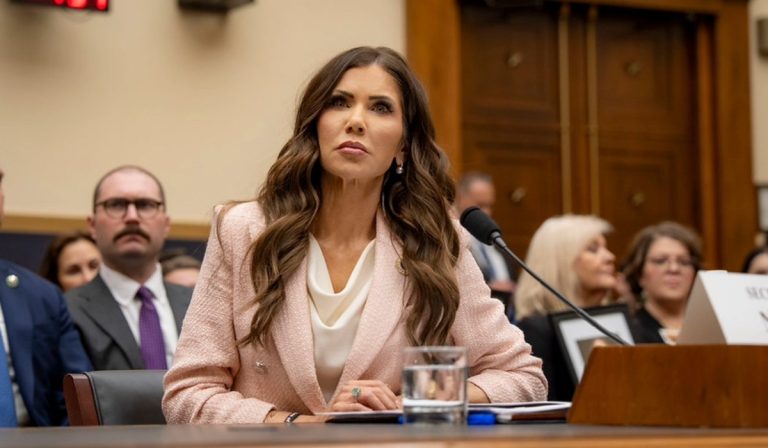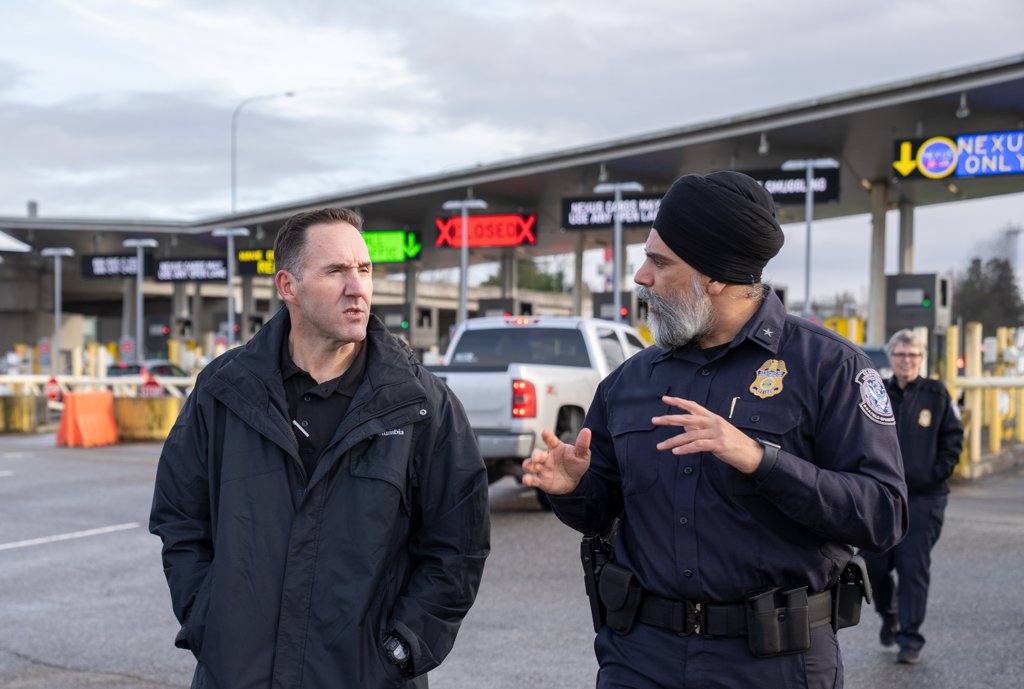
Donald R. Stakes, Deputy Executive Assistant Commissioner for CBP Office of Field Operations, during an on-site visit with Port Director Harmit Gill. (Asst. Dep Exec Asst Commissioner Donald R. Stakes)
BLAINE, Wash. — A high-level U.S. Customs and Border Protection tour of border crossings signals sustained federal scrutiny as northern border operations remain in focus.
CBP Deputy Executive Assistant Commissioner Donald R. Stakes toured the Sumas and Lynden ports of entry last week, meeting with officers assigned to the Seattle Field Office as federal attention on northern border operations continues.
Stakes said the visit focused on observing officers securing the border, calling their work critical along the longest international border in the world.
“During my port tours at Sumas and Lynden, WA, I met with our DFO Seattle officers securing the U.S. northern border while enforcing lawful trade and travel,” Stakes said. “Their professionalism and dedication are critical to securing the longest international border in the world.”
The trip also included stops in Blaine, Lynden and Sumas border crossings. Stakes also visited a NEXUS enrollment center to observe officers processing applicants for the trusted traveler program, which provides expedited crossings for pre-approved members traveling between the United States and Canada.
A Familiar Pattern of Leadership Visits
High-level visits to Whatcom County ports are routine but notable because they often coincide with periods of heightened enforcement or operational change.
In 2025, Area Port Director Harmit Gill personally led a closed-door tour at the Peace Arch Port of Entry that preceded the rollout of expanded biometric screening technology at land crossings. That visit connected federal leadership, policy stakeholders and technology partners during a year of intensified inspections and infrastructure deployment.
What It Signals
No new policies were announced during Stakes’ visit. However, the tour reinforces sustained federal oversight of northern border operations as biometric identity verification, trusted traveler programs and enforcement visibility continue to shape how travelers move across the 49th parallel.
For residents and frequent cross-border travelers in Whatcom County, the visits underscore a continued federal focus on staffing, technology and processing efficiency at the region’s busiest crossings.
About the Author