WHATCOM COUNTY, Wash. — A U.S. Supreme Court decision striking down President Donald Trump’s tariffs is drawing a swift response from Washington leaders. They say the ruling carries immediate implications for border communities and trade-dependent industries across the state.
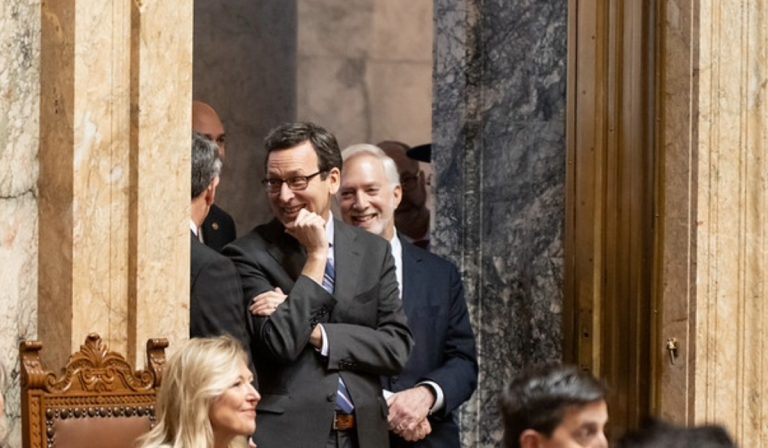
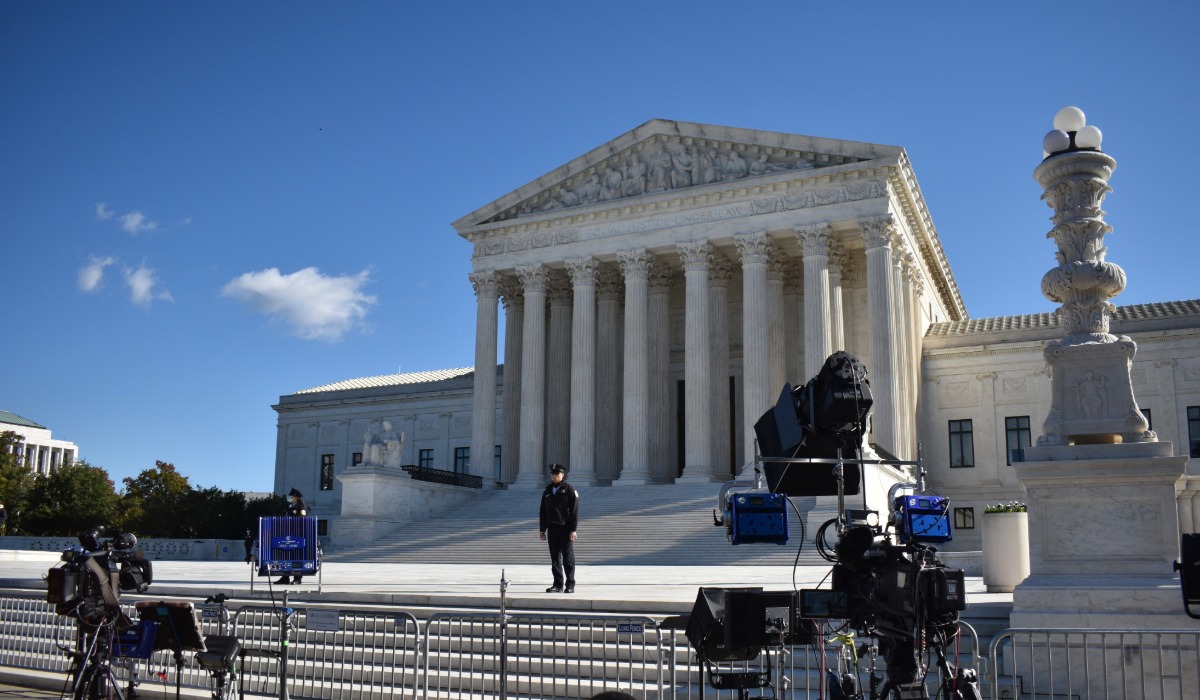
Governor Bob Ferguson praised the high court’s 6-3 ruling. The court found the administration lacked authority to impose sweeping import tariffs under the International Emergency Economic Powers Act of 1977. The decision also affirms earlier lower-court rulings and reinforces Congress’ constitutional role in setting trade policy.
“Washington is one of the most trade-dependent states in the nation,” Ferguson said. “Research has shown that American companies and consumers are bearing 90 percent of the economic burden of President Trump’s tariffs.”
Local economies tied closely to cross-border trade
For communities along the U.S.–Canada border, including Blaine and Ferndale, the case has been closely watched. This follows years of uncertainty tied to tariffs and political rhetoric surrounding trade and annexation talk involving Canada.
“That’s why I led a coalition of more than two dozen public and private partners to tell Washington’s story to the Supreme Court,” Ferguson said. “The court agreed with us and struck down the President’s harmful and illegal tariffs.”
Washington remains one of the most trade-reliant states in the country. Each year, billions of dollars in goods move through regional ports and border crossings. As a result, the trade supports logistics, agriculture, manufacturing and retail sectors that form the backbone of many local economies.
Court emphasizes limits on presidential authority
Writing for the majority, Chief Justice John Roberts said the Constitution assigns taxation and duty powers to the legislative branch.
“The president asserts the extraordinary power to unilaterally impose tariffs of unlimited amount, duration, and scope,” Roberts wrote. “In light of the breadth, history, and constitutional context of that asserted authority, he must identify clear congressional authorization to exercise it.”
The ruling specifically rejected the use of the emergency powers law as a legal basis for tariffs. Instead, the court said the law applies only to extraordinary foreign threats and does not grant authority to set import duties.
Washington coalition highlighted economic fallout
State officials, business groups and labor organizations urged the court to consider Washington’s exposure to global trade. Their filings cited increased costs, reduced competitiveness and revenue losses tied to the tariffs.
State economic projections previously estimated the measures could reduce Washington’s general fund revenue by more than $2 billion over several years. In addition, growth is expected to slow.
What it means for border communities
While the ruling centers on federal authority, its practical effects are expected to be felt most in trade corridors like Whatcom County. Here, daily commerce, trucking and cross-border retail activity closely track tariff policy.
Local business leaders have repeatedly warned that uncertainty around tariffs can quickly ripple through freight volumes, pricing and consumer demand on both sides of the border.
The Supreme Court’s decision removes the legal foundation for the tariffs. However, broader trade policy debates and their impact on Washington’s border economy are likely to continue.
About the Author