

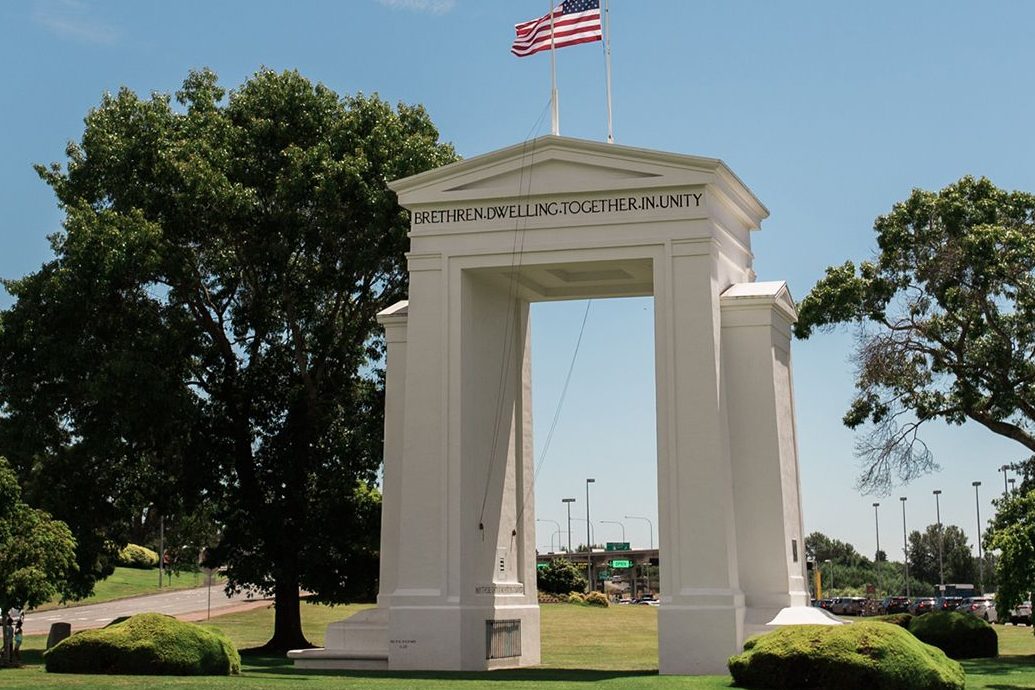
WHATCOM COUNTY — A narrow vote in the U.S. House to roll back tariffs on Canada could carry implications for border communities in northwest Washington, where cross-border trade and travel remain tightly intertwined.
Lawmakers voted 219–211 to approve a resolution aimed at reversing tariffs imposed on Canadian goods under emergency authority invoked by Donald Trump. While the measure faces steep hurdles in the Senate and is unlikely to survive a presidential veto, the vote signals that tariff policy tied to Canada remains politically unsettled.
Six Republicans voted in favor: Don Bacon, Kevin Kiley, Brian Fitzpatrick, central Washington’s Dan Newhouse, Thomas Massie, and Jeff Hurd. One Democrat voted against it: Jared Golden.
For Whatcom County, instability alone carries economic weight.
The economic impact is real, affecting more than daily life. Entire festivals and events are shutting down. Organizers of the annual Whatcom County Bluegrass Festival recently canceled the event, citing a sharp decline in expected attendance from Canadian visitors.
Cross-border traffic remains below pre-tariff levels
Canada is Washington state’s largest international trading partner. In border communities such as Blaine and Bellingham, Canadian visitors account for a substantial share of retail, fuel, grocery and tourism spending.
Following the initial tariff announcement earlier this year, cross-border vehicle traffic at the Blaine ports of entry declined compared to the same period the year prior, according to federal crossing data. Local business associations also reported softer Canadian spending, particularly in discretionary retail and hospitality sectors.
While multiple factors influence cross-border traffic, including currency exchange rates and fuel prices, business owners in Whatcom County cited tariff tensions and broader trade uncertainty as contributing factors.
Retailers near the border reported slower weekend traffic during peak Canadian travel periods. Some hospitality operators described a measurable drop in advance bookings from British Columbia customers during the early months of the tariff dispute.
Even modest percentage declines in Canadian visits can translate into meaningful revenue shifts in a border-dependent economy.
Symbolic vote, uncertain policy path
The House resolution seeks to terminate the national emergency declaration used to justify the tariffs. Six Republicans joined Democrats in voting for the measure, while one Democrat voted against it.
However, the resolution faces long odds in the Senate. Even if it were to advance, a presidential veto would likely block it unless Congress musters the votes for an override.
As a result, the vote does not immediately change tariff policy.
Instead, it reflects growing congressional discomfort with prolonged trade tensions involving Canada.
Why the issue resonates locally
This vote carries particular significance for border communities in Whatcom County. The original tariff announcement in March 2024 prompted PNW Daily’s first live coverage from Peace Arch State Park, where cross-border families, travelers and businesses voiced concern about the potential economic fallout.
Months later, federal enforcement activity at the border drew regional attention and expanded ongoing coverage of cross-border policy.
For many in Whatcom County, tariffs are not abstract trade tools debated in Washington, D.C. They shape daily decisions about travel, spending and cross-border business operations.
While the House vote is largely symbolic, it underscores that tariff policy toward Canada remains politically fluid. For a region that depends heavily on cross-border stability, continued uncertainty remains a factor in local economic planning.
About the Author



1 thought on “Canada Tariff Vote Highlights Uncertainty For Whatcom County”