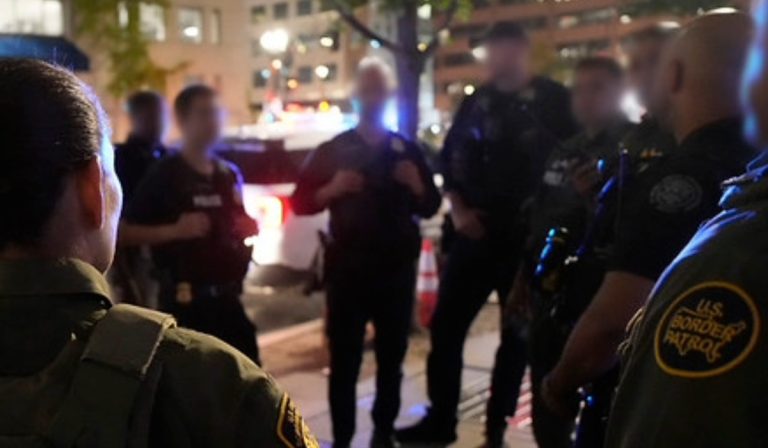
White House Border Czar Thomas Homan and U.S. Customs and Border Protection Commissioner Rodney S. Scott tour the southwest border in San Diego, December 13, 2025. (CBP Photo by Jeff Underwood)
WASHINGTON — As U.S. border wait times continue to grow due to expanded biometric screening, enhanced security protocols, and higher enrollment fees, U.S. Customs and Border Protection (CBP) has rolled out a new tool aimed at helping travelers avoid additional delays.
The agency this week launched a push notification system inside its Trusted Traveler Programs mobile app, allowing applicants to receive real-time updates on their enrollment status and alerts when interview appointments become available. CBP says the feature is designed to reduce processing backlogs that contribute to longer lines at ports of entry.
How the new app feature may reduce U.S. border wait times
Applicants using the Trusted Traveler Programs mobile app will now receive push notifications for key milestones in the approval process.
Those alerts include application submission, conditional approval, final approval, or denial. In addition, users can select up to five enrollment centers and opt in to receive notifications when new interview slots open.
As a result, travelers no longer need to manually refresh the system or check email inboxes for updates. CBP says missed interview opportunities are a major reason many applications stall for months.
The app is available on both Google Play and the Apple App Store. New users will be prompted to enable notifications upon first launch. Existing users must turn alerts on manually through their phone’s settings.
Why U.S. border wait times are increasing
U.S. Customs and Border Protection has expanded biometric identity verification at airports and land border crossings in recent years.
That expansion includes facial recognition, enhanced document scanning, and automated traveler identity checks. While the agency says the technology improves security and accuracy, it has also slowed processing during peak travel periods.
At the same time, CBP raised enrollment fees for most Trusted Traveler Programs in late 2024, marking the first major increase in more than a decade. Officials said the higher fees were necessary to support staffing, infrastructure upgrades, and growing demand.
For travelers, however, the combined effect has been longer lines, longer approvals, and longer waits.
What are the Trusted Traveler Programs?
Trusted Traveler Programs allow pre-approved, low-risk travelers to use expedited lanes and kiosks at airports and border crossings.
Applicants must pass a background check, submit biometric data, and complete an in-person interview. Once approved, members typically receive benefits for five years.
CBP operates four major Trusted Traveler Programs.
Global Entry
Global Entry is designed for international travelers returning to the United States.
Members use automated kiosks instead of traditional passport control lines. The program also includes TSA PreCheck benefits.
Cost: $120 for five years.
TSA PreCheck
TSA PreCheck provides expedited security screening at U.S. airports.
Members usually do not need to remove shoes, belts, or light jackets. They can also leave laptops and liquids inside their bags.
Unlike the other programs, TSA PreCheck is administered through private enrollment providers rather than CBP.
Cost: Typically $76–$85 for five years, depending on the provider.
NEXUS
NEXUS is designed for frequent travelers between the United States and Canada.
Members can use dedicated lanes at land border crossings, kiosks at select airports, and TSA PreCheck lanes when flying from U.S. airports.
Cost: $120 for five years.
SENTRI
SENTRI is intended for travelers who frequently cross the U.S.-Mexico land border.
Members gain access to dedicated vehicle lanes and expedited entry processing.
Cost: $120 for five years.
What this means for travelers
CBP says millions of travelers rely on Trusted Traveler Programs to reduce congestion and allow officers to focus on higher-risk travelers.
However, as biometric screening expands and international travel rebounds, U.S. border wait times have continued to rise.
The agency says the new push notification system is part of a broader effort to modernize its enrollment pipeline and reduce friction before travelers ever reach the border.
For travelers facing longer lines, higher costs, and stricter screening, CBP says faster approvals could help offset those delays.
Stay tuned for more PNW Daily coverage at the U.S. border and across the Pacific Northwest.
About the Author