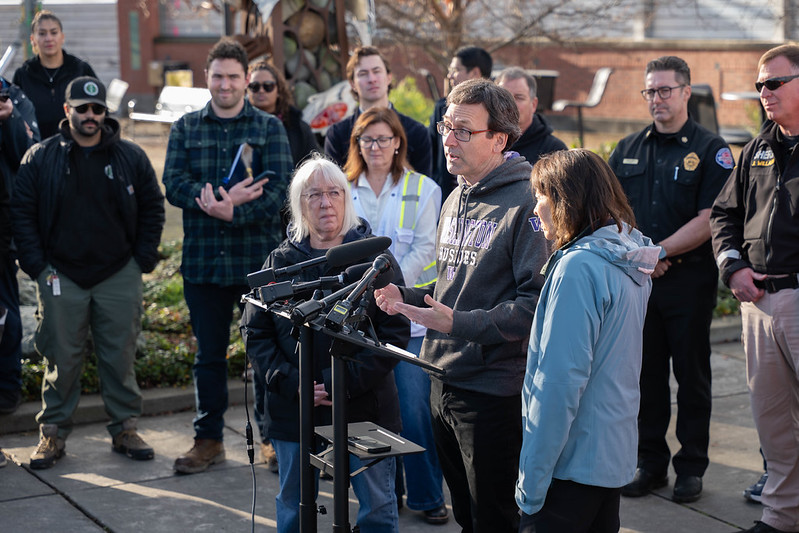
Gov. Bob Ferguson speaks at a press conference while visiting flood damaged areas. (Gov. Bob Ferguson's office)
OLYMPIA, WA — Washington state will receive $181 million in federal funding for rural health care, but the award comes amid ongoing partisan tensions over the federal budget. The funds come from the Rural Health Transformation Program, part of the Republican-led One Big Beautiful Bill Act, which also included broad spending cuts and changes to Medicaid.
Governor Bob Ferguson emphasized the importance of the funding for rural communities while warning that it does not replace federal cuts. “Rural Washington boasts strong communities, robust agriculture and some of the most beautiful landscapes in the world,” Ferguson said. “This funding will help fortify rural communities against what is to come, but it is only part of what is needed to sustain rural health care.”
Federal and state Republicans have highlighted the program as a key investment in rural health infrastructure. Washington GOP officials in Congress including Reps. Dan Newhouse and Michael Baumgartner supported the legislation and have stressed its benefits for hospitals and clinics in rural districts. Meanwhile, Democratic leaders point out that the rural health funding is modest relative to Medicaid reductions and warn that more support is needed to prevent hospital closures.
How Washington Will Use the Funding
Washington will direct the $181 million to programs across all 39 counties, with particular focus on the 22 fully rural counties: Adams, Clallam, Columbia, Ferry, Garfield, Grant, Grays Harbor, Island, Jefferson, Kittitas, Klickitat, Lewis, Lincoln, Mason, Okanogan, Pacific, Pend Oreille, San Juan, Skamania, Stevens, Wahkiakum, and Whitman.
Key initiatives include:
- Expanding community-based care and telehealth programs such as the University of Washington’s Project ECHO.
- Strengthening behavioral health services to relieve rural hospitals and schools.
- Investing in workforce development to recruit and retain clinicians in rural areas.
- Supporting Native families and tribal health programs.
- Upgrading technology to improve chronic disease management, specialty care access, and efficiency in rural health facilities.
State agencies, universities, tribal organizations, and hospital associations will work together to ensure funding reaches areas with the greatest need.
About the Rural Health Transformation Program
Managed by the Centers for Medicare and Medicaid Services, the program will provide $10 billion annually nationwide from 2026 through 2030. Its goals include improving access to care, expanding workforce capacity, leveraging technology, and strengthening financial stability for rural hospitals.
While the $181 million represents a significant investment in Washington’s rural health infrastructure, political observers note the debate over Medicaid and broader federal spending shows that rural communities still face long-term challenges in maintaining accessible, high-quality care.
About the Author